The following information relates to a period of research and development rooted in working within a historic garden as a site for making and thinking. Through sustained, site-responsive enquiry, I will explore how creative practice can take place beyond the traditional studio, working on site and learning from specialist craftspeople and artists. Research will draw on material process, folklore and ecology, and lay foundations for future artist-led and residency-based work shaped by place.
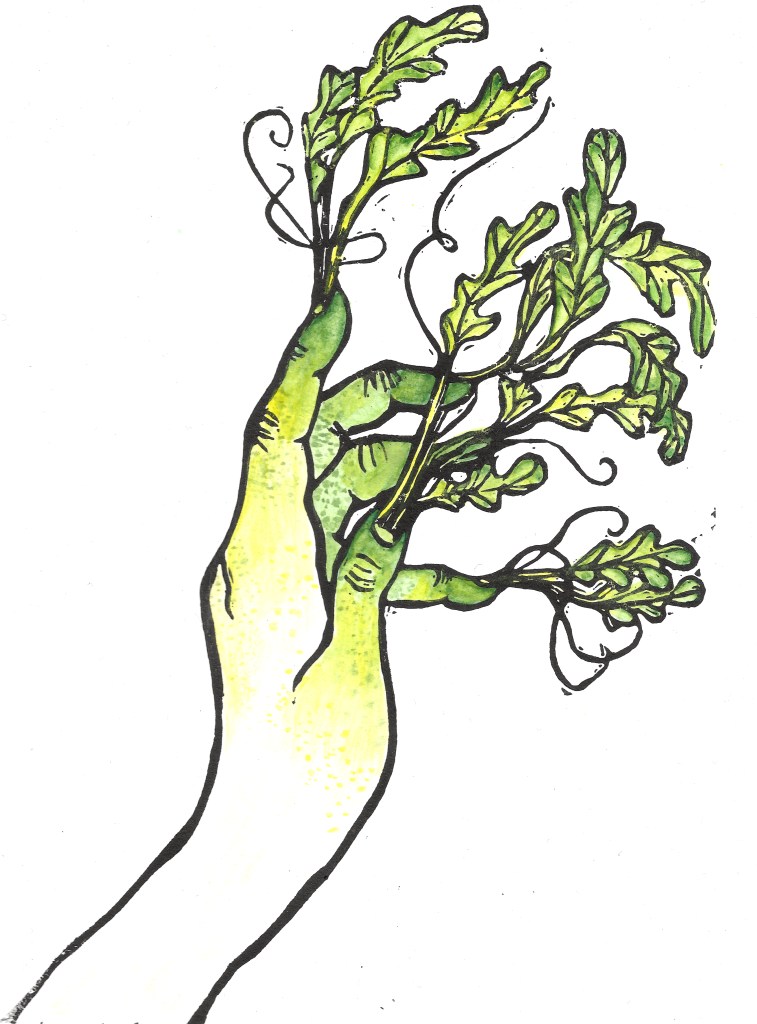
Image: Greenfingered, 2024. Hand coloured linocut by Jennie Syson
- 1. Site for exploration & experimentation: The Walled Garden at Wollaton Park
- 2. Action Research in the Walled Garden
- 3. Current Practice
- 4. Selected curatorial projects
1. Site for exploration & experimentation: The Walled Garden at Wollaton Park
The Wollaton Walled Garden Project is a community-led initiative restoring and revitalising a historic 18th-century kitchen garden in Wollaton Park, Nottingham. Once derelict, the four-acre site has been transformed by dedicated volunteers into a thriving orchard, vegetable and flower beds, a sensory garden, and a space for heritage learning. Over 12,600 volunteer hours in 2025 alone supported tours, open days, and seasonal festivals that welcomed more than 2,500 visitors.
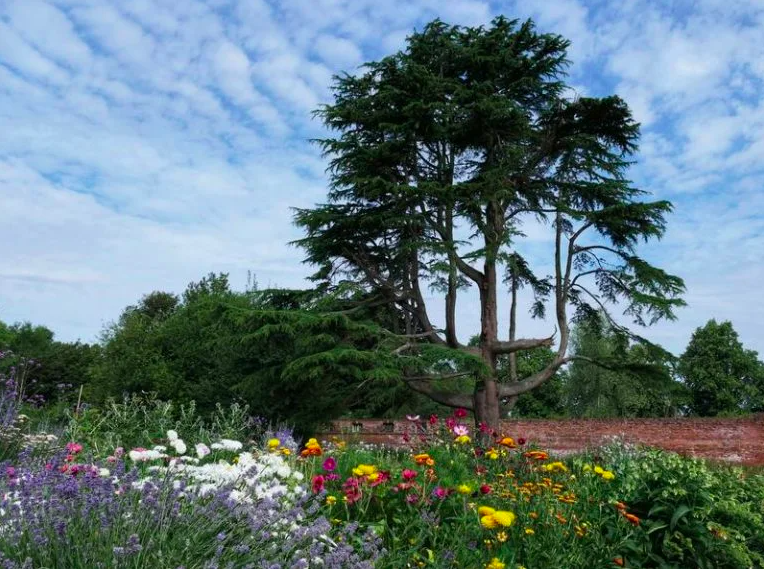
The Walled Garden in 2025 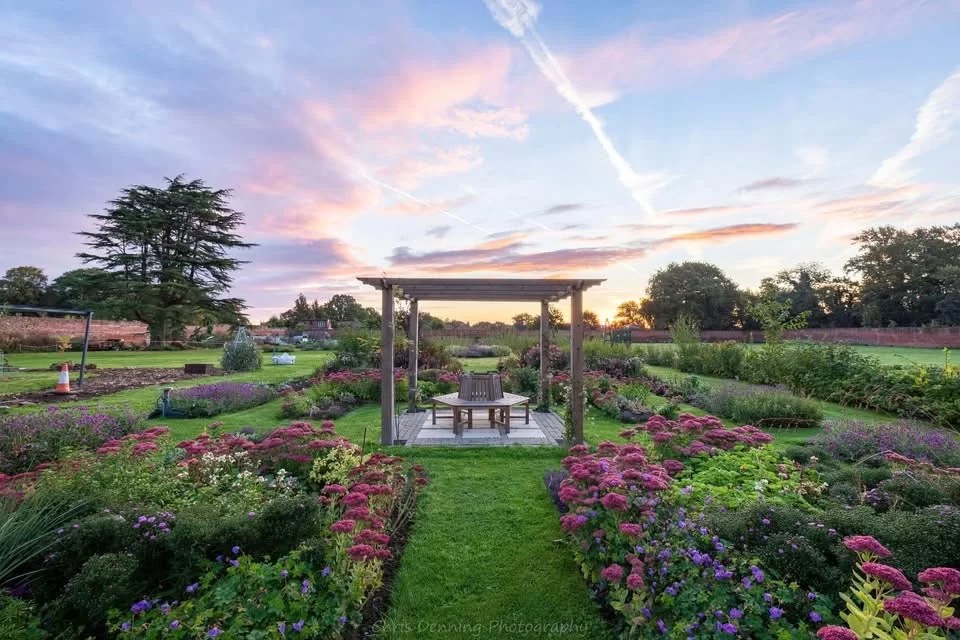
Heritage planting at the Walled Garden 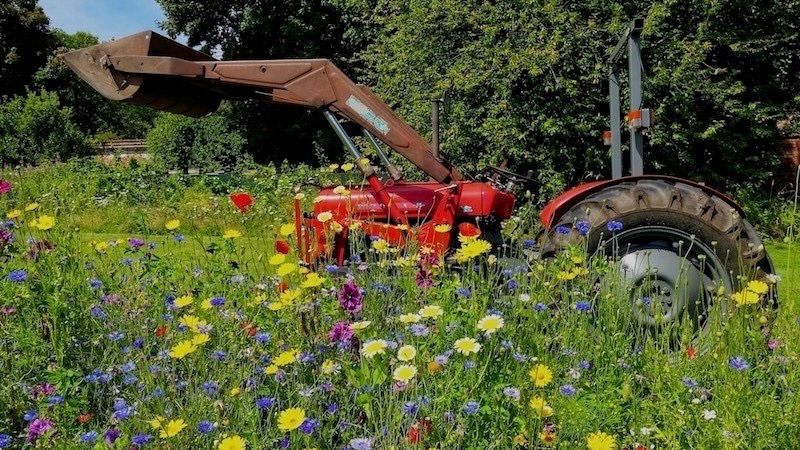
Borrowed tractor helps out in the meadow 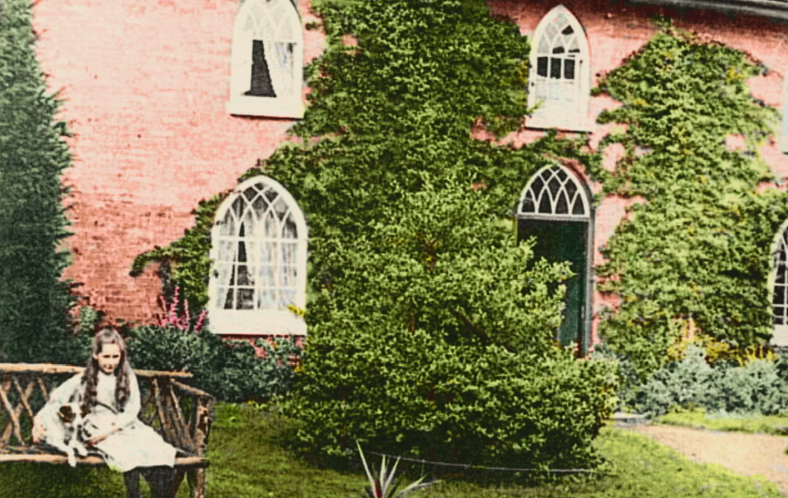
Head Gardener’s Cottage in 1900s 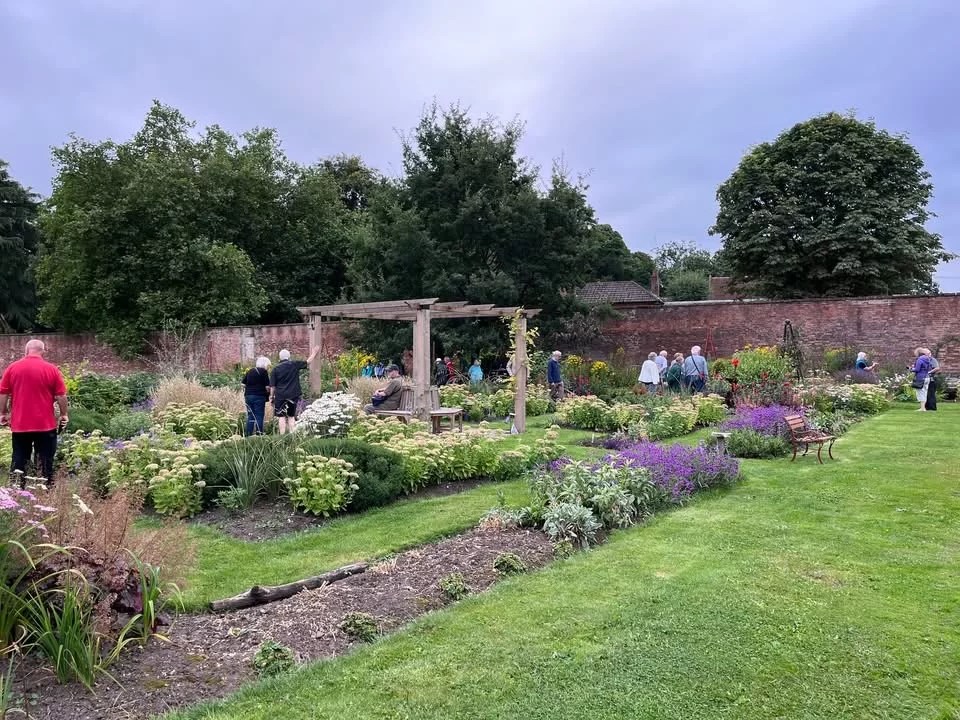
the beginnings of the sensory Garden at the Walled Garden 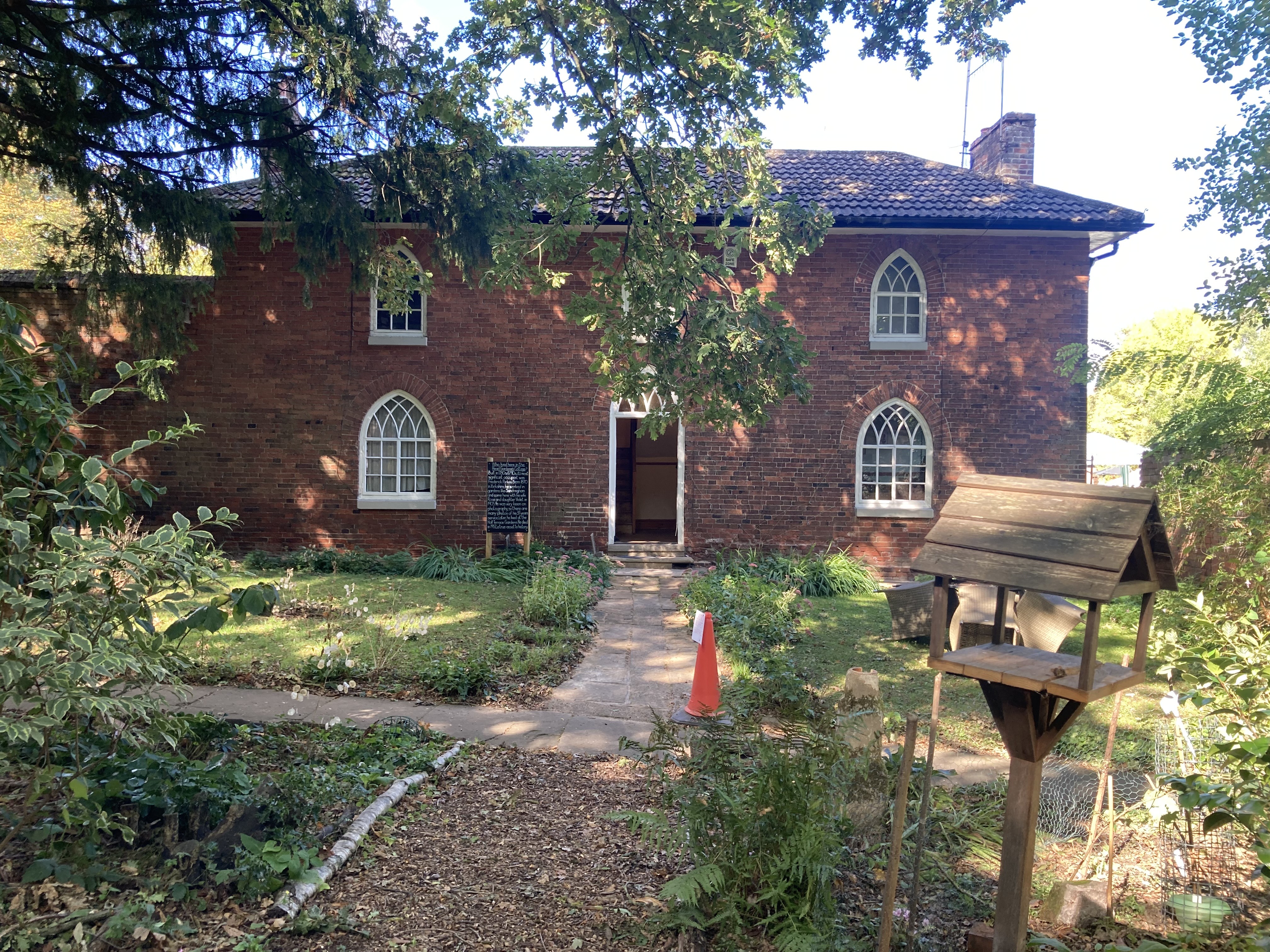
The Head Gardener’s Cottage AKA Volunteer HQ 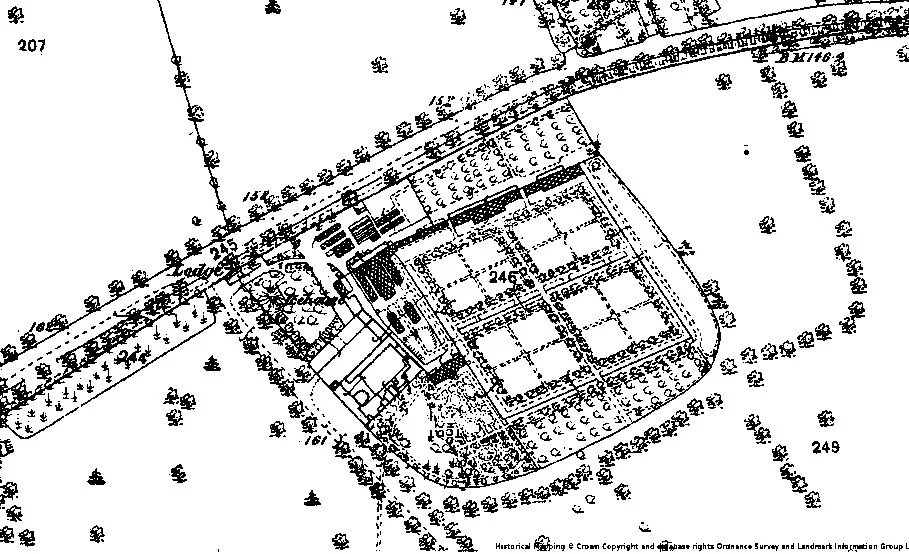
Plan of the Walled Garden at Wollaton Park 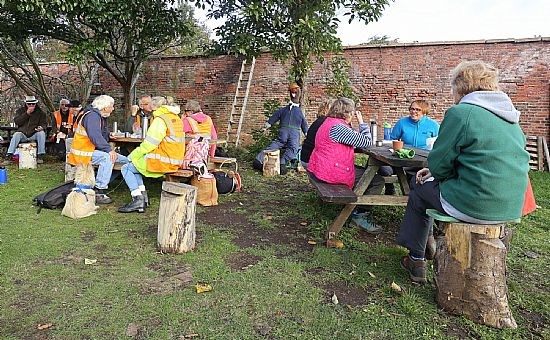
Volunteer lunch break at the Walled Garden 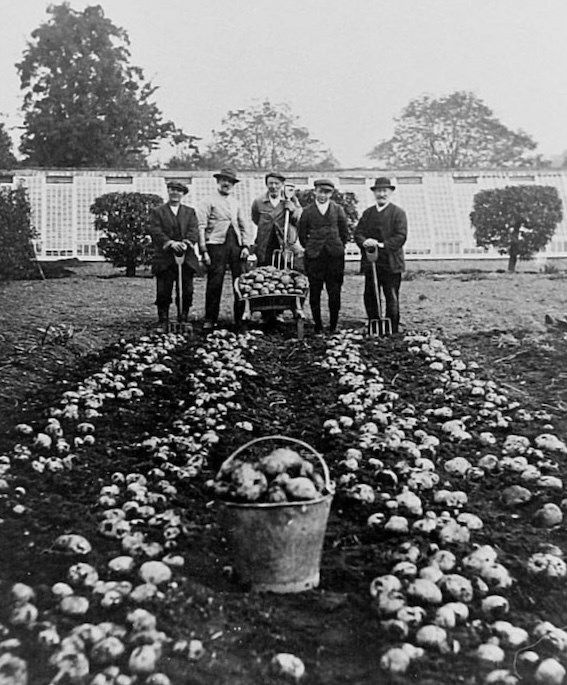
The Walled Garden in 1920s 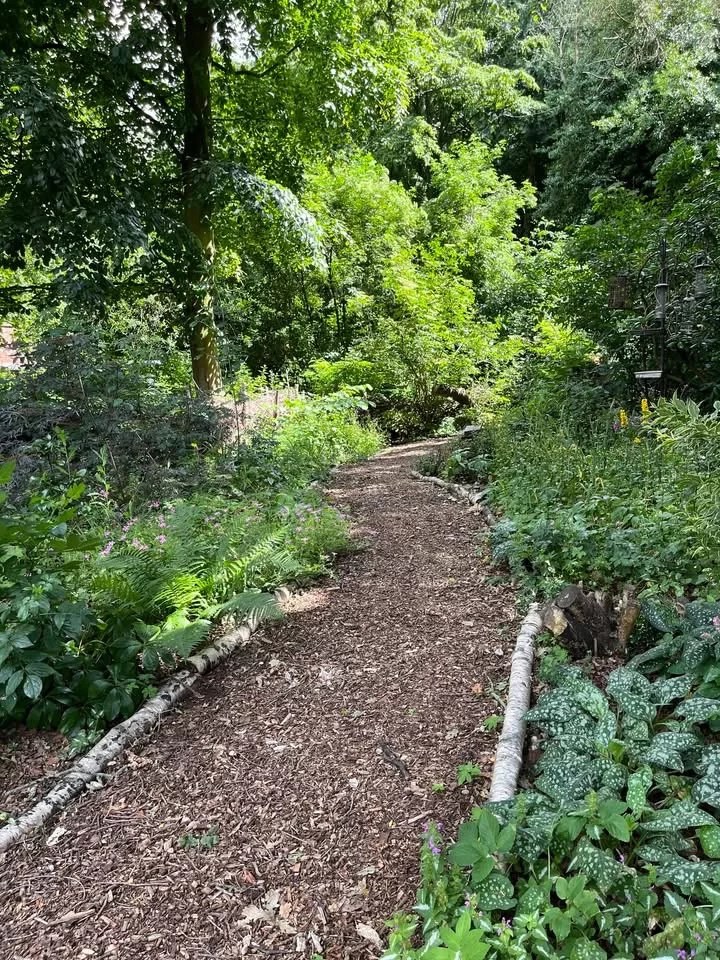
New Pathways
As part of my research, both as an artist on site and as a curator with experience of working in the public realm, I am interested in what brings together ecology, community, and creative practice. With kind permission from volunteers at the garden who are mostly retired people between the ages of 60 – 75 and who comprise members of Friends of Wollaton Park (FOWP), Wollaton Historical and Conservation Society (WHaCS), and Nottingham City Council (who own the land). My year-long investigation is intended is an experiment with site-responsive projects rooted in seasonality, slowness, and care.
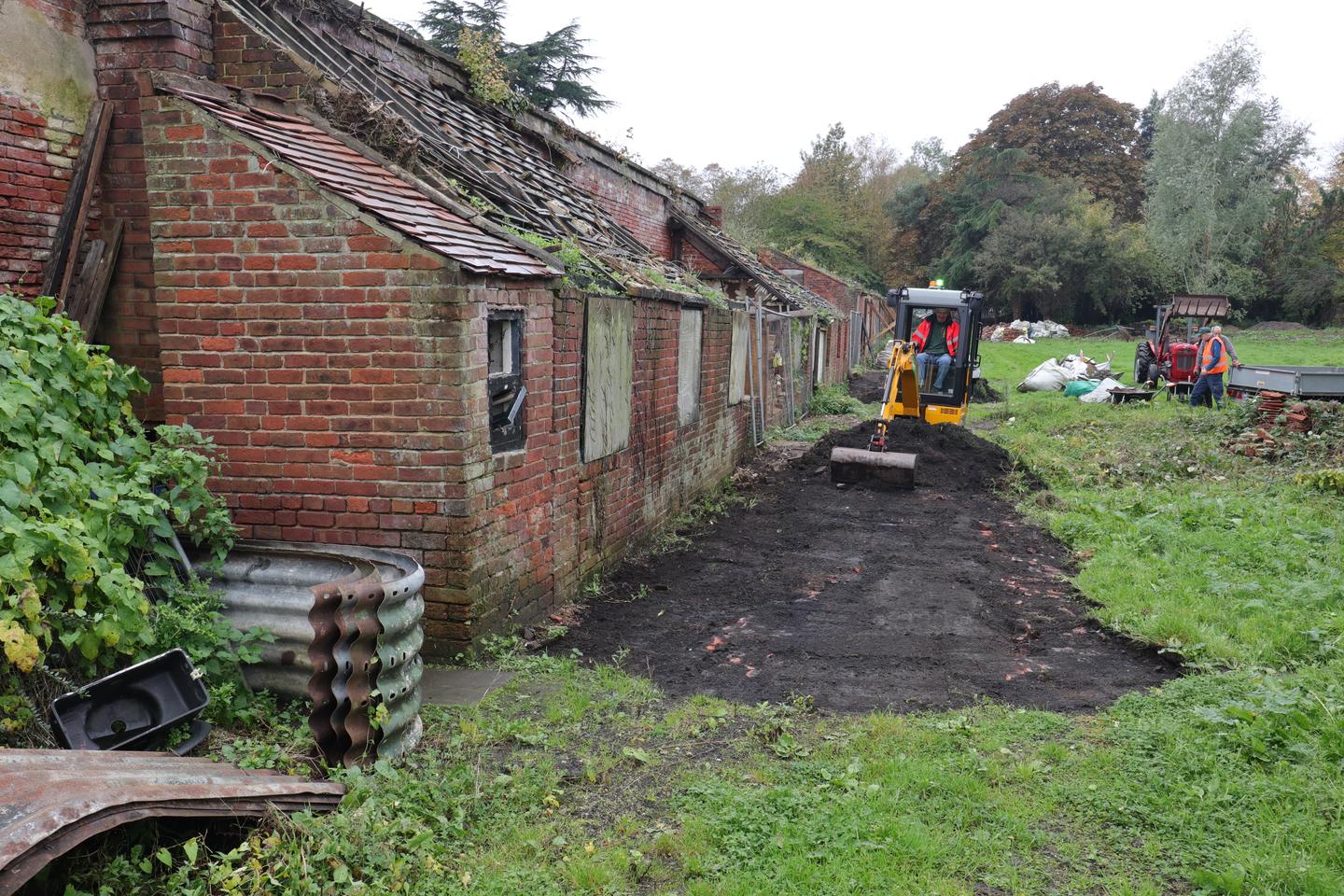
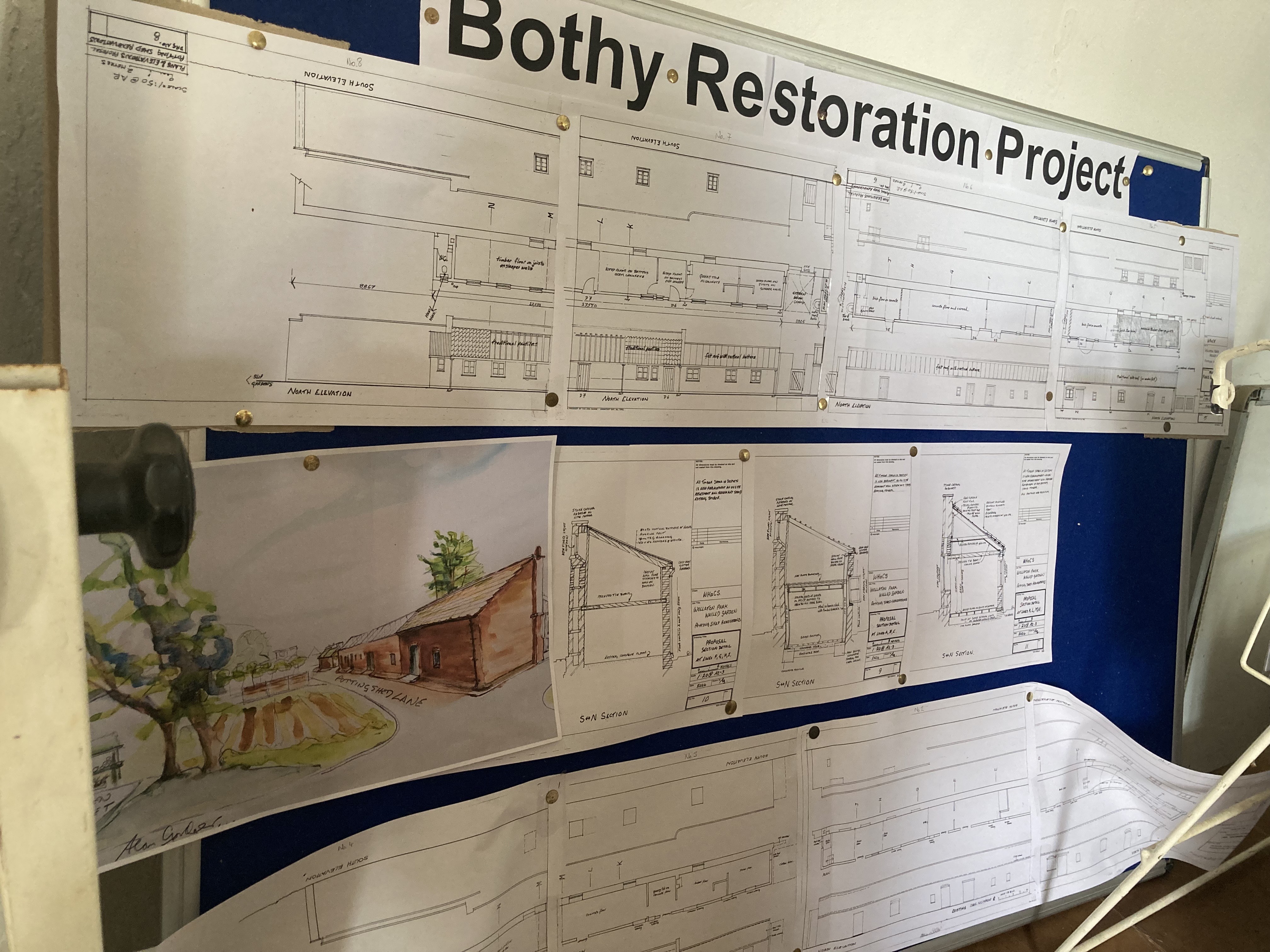
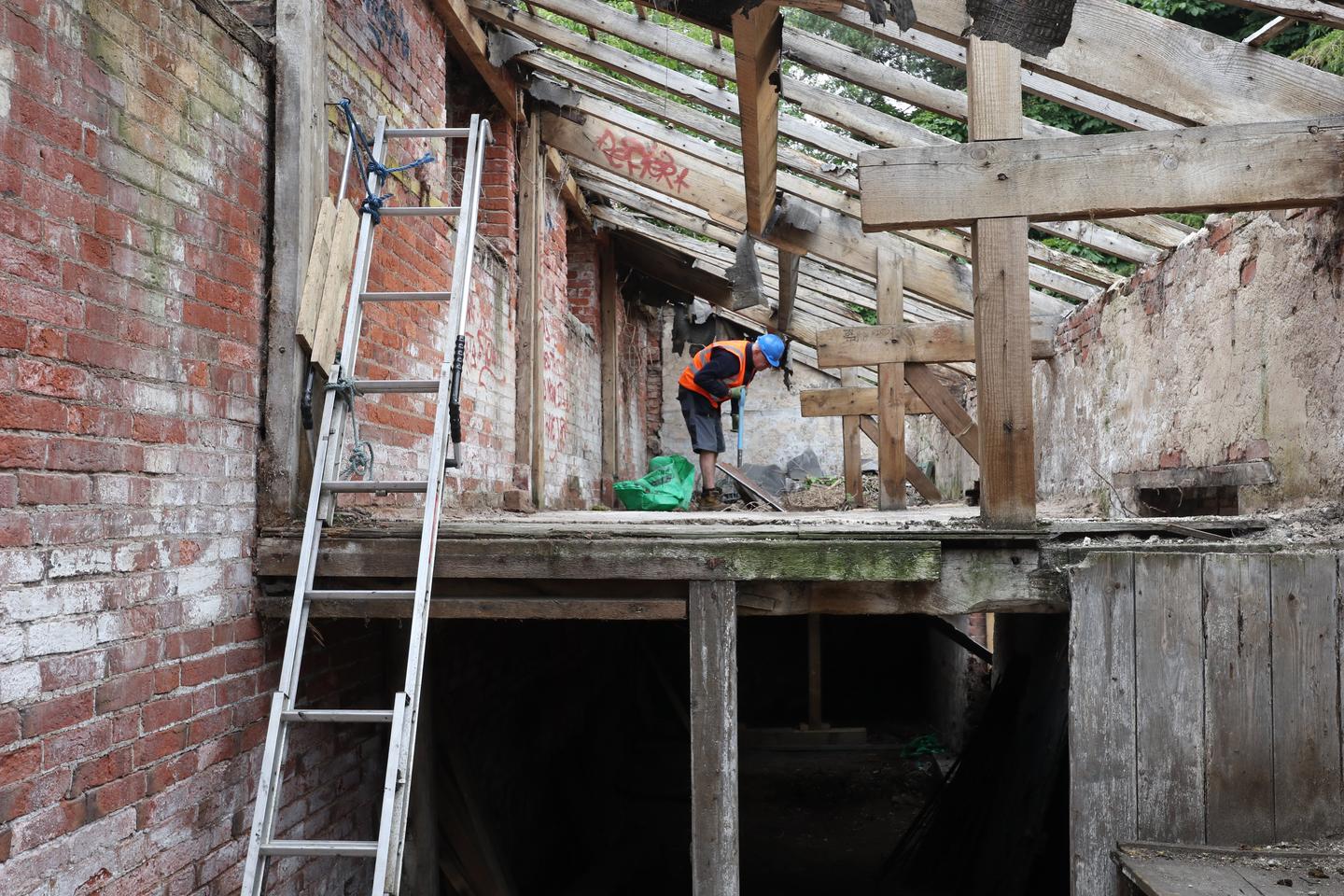
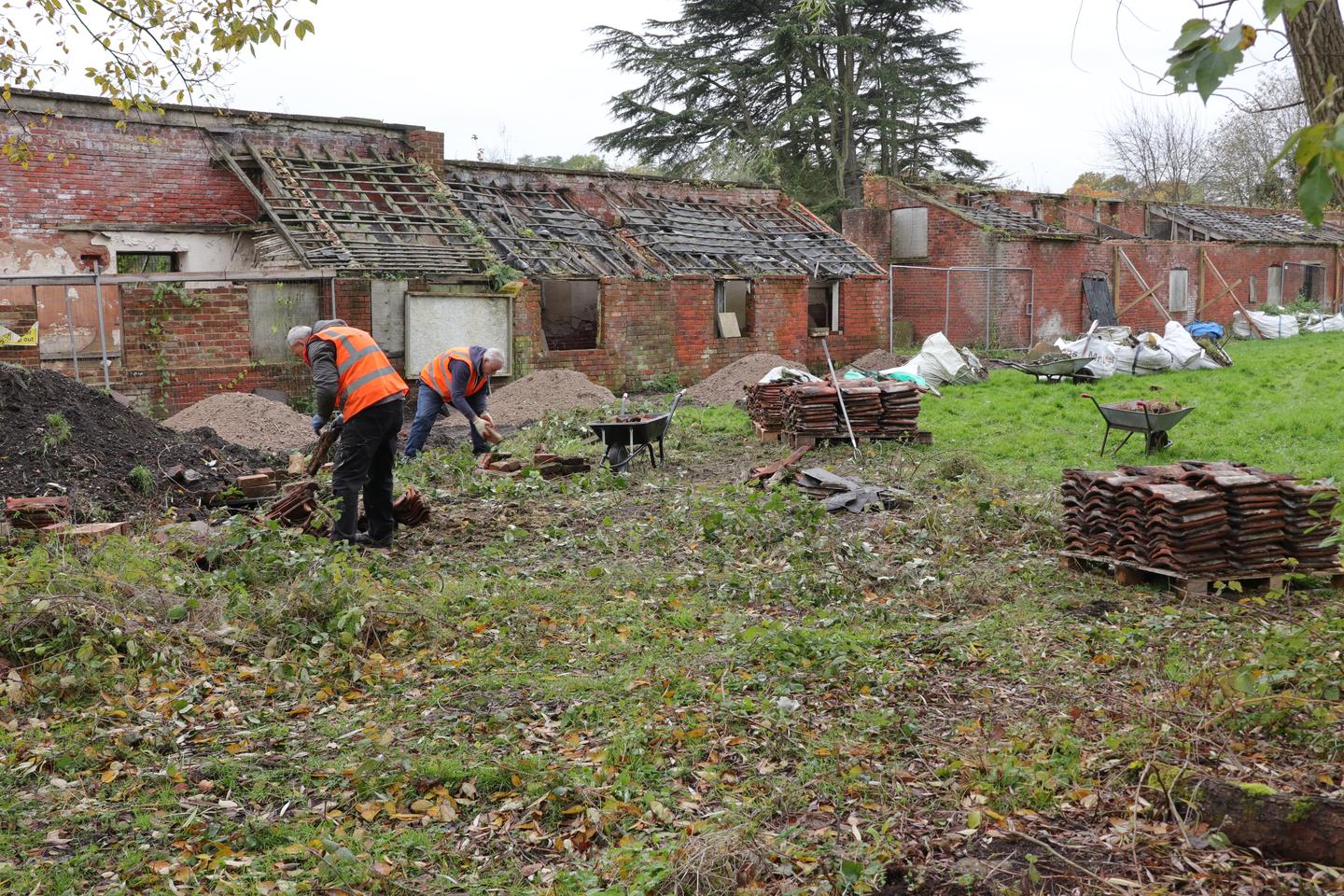
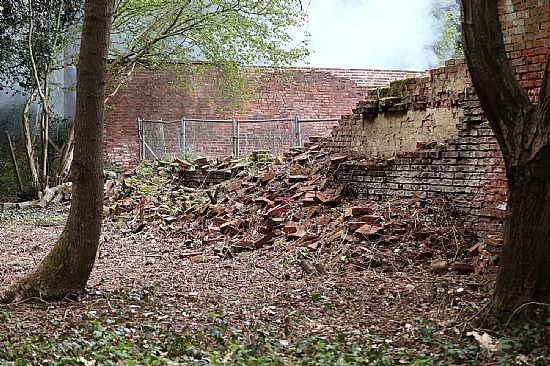
Bothy Restoration: Future Spaces for Creativity?
The Garden has 10 bothy buildings which are currently in a state of disrepair. Planning permission has just been granted to begin restoration of these historic structures which have not been used since 1990’s. I am interested in exploring how/if an artists residency programme as part of the regeneration of these historic structures would complement any future large funding bids to Heritage Lottery Fund and/or Arts Council England.
2. Action Research in the Walled Garden
During my time at the Walled Garden and as I explore other ways of working in heritage garden settings, I will keep in mind the following aims to:
- Sustain the garden as a cultural and ecological resource.
- Plant the idea for inclusive creative projects that connect people to place.
- Grow a framework where art, heritage, and horticulture meet. Encouraging conversation and fostering new relationships.
- Research a sustainable model for artist residencies that bridges personal practice, collective care, and public engagement.
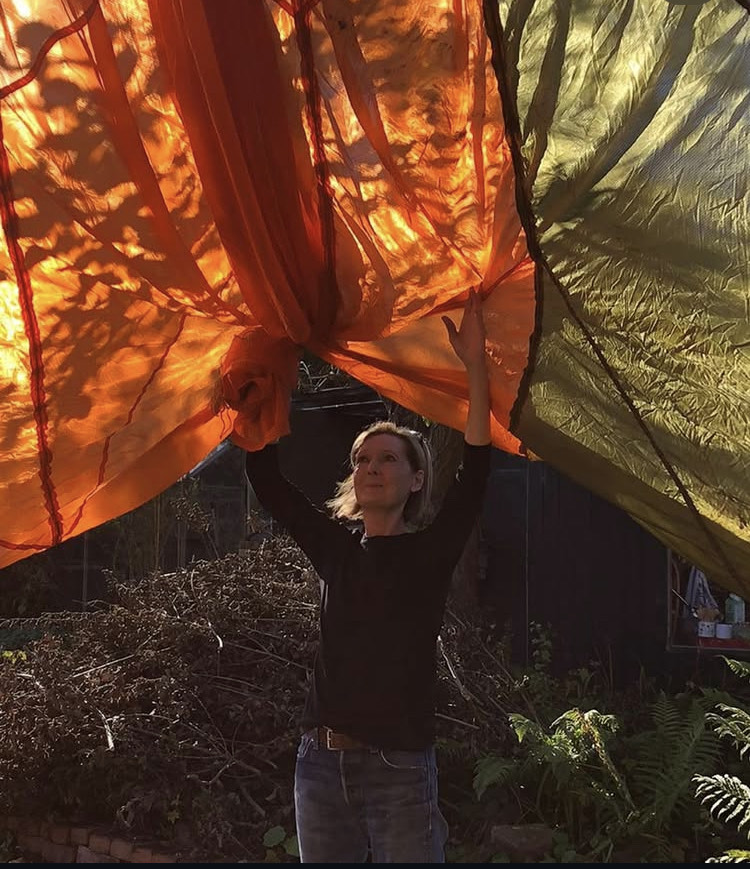
visiting Val Turton in her Allotment 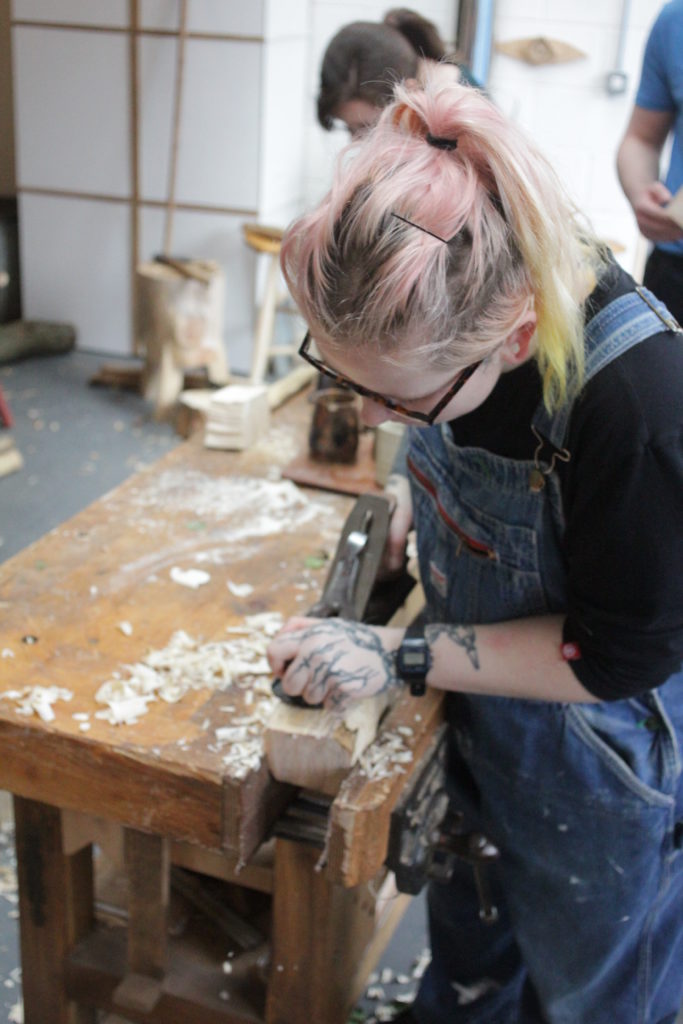
Woodworking with By Our Hands 
Plant dying with raw materials from the garden 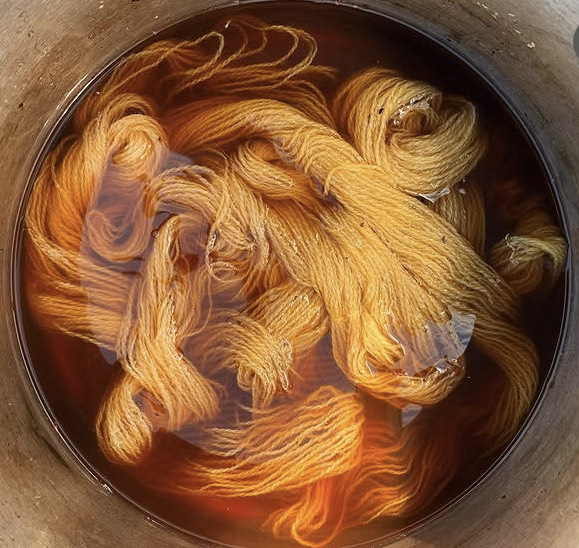
Experimenting with Natural Plant Dyes 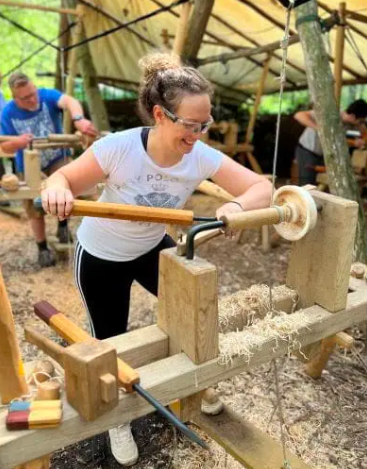
Exploring Pole Lathe Working skills 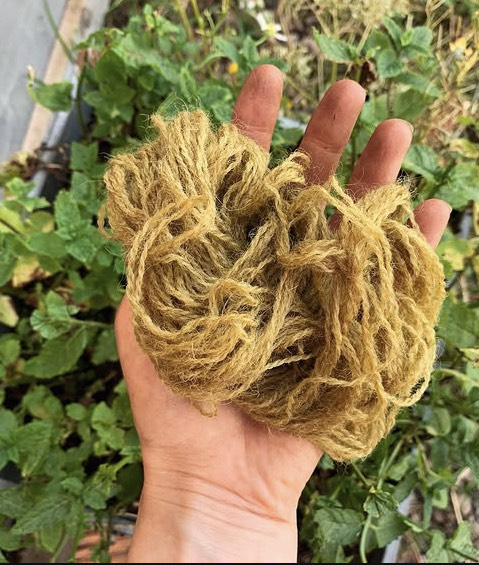
Consulting with heritage experts including WHaCS Ninya Mikhaila on Heritage Costumes and fabrics 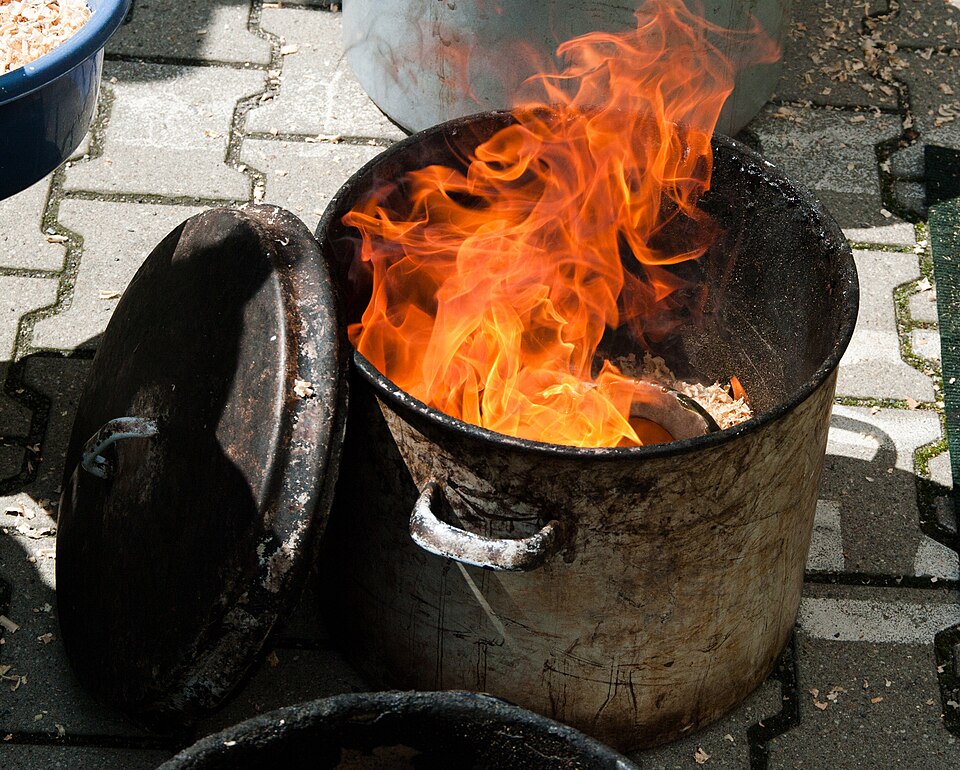
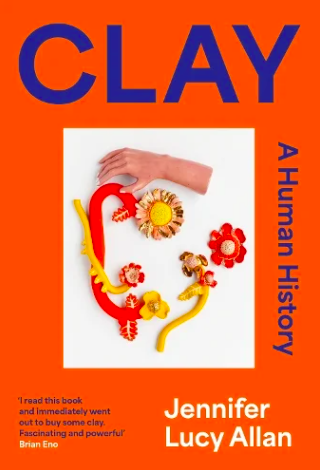
Raku Firing using Garden Resources 
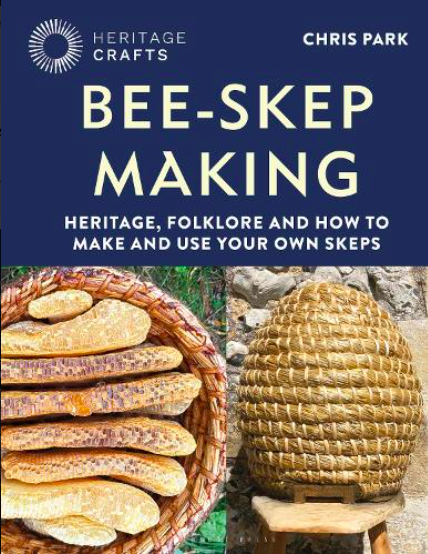
Bee Skep Weaving with Heritage experts
Above are some examples of the types of activity I hope to test out when I am on site. It’s important to say these experiments and makeshift workshops with experts would not be delivered as a public activity, as the Walled Garden is closed to the public most of the time (except during open days and planned tours) – but many volunteers are interested in sharing knowledge and resources on forgotten skills and share my interest in Heritage Crafts. If artists and makers come to share skills with me on site, I will encourage conversation and invite those who are interested to watch demonstrations and have a cuppa via the active volunteer WhatsApp Group. It’s highly likely that volunteers will want to give impromptu tours and talk about their work too.
I plan to finalise the practitioners I am working with once I know I have funds in place to do so, but an example which I am most likely to follow up on are By Our Hands We Make Our Way. I have worked previously with co-directors Martin Somerville and Carly Williams on various site specific art projects, I would value learning specific skills from them (esp. woodwork) both on site and in their workshop in Sneinton Market, Nottingham. They both have extensive experience working in community and education settings supporting vulnerable people that would help me inform and develop future community models for onsite residencies.
Venturing outside the garden
Another vital element to my research plan is to make informal but comparative studies of other residency spaces and places in which artists are trying new things to make connections with local history, folklore, ecology and heritage crafts. The spaces I have chosen to visit include Field System in Dartmoor presenting Folk inspired art and objects – who I have an existing relationship with (they sell my work in their shop) and might like to develop a collaborative project in the future; Cambridge Botanic Garden who have recently hosted artist Nabil Ali to create a Plant Dye Index; Val Turton is an artist based in Nottingham who has been providing impromptu residencies in her allotment space 326 artspace in St Ann’s for artists and gardeners alike. I value her advice and support and would benefit from her mentorship.
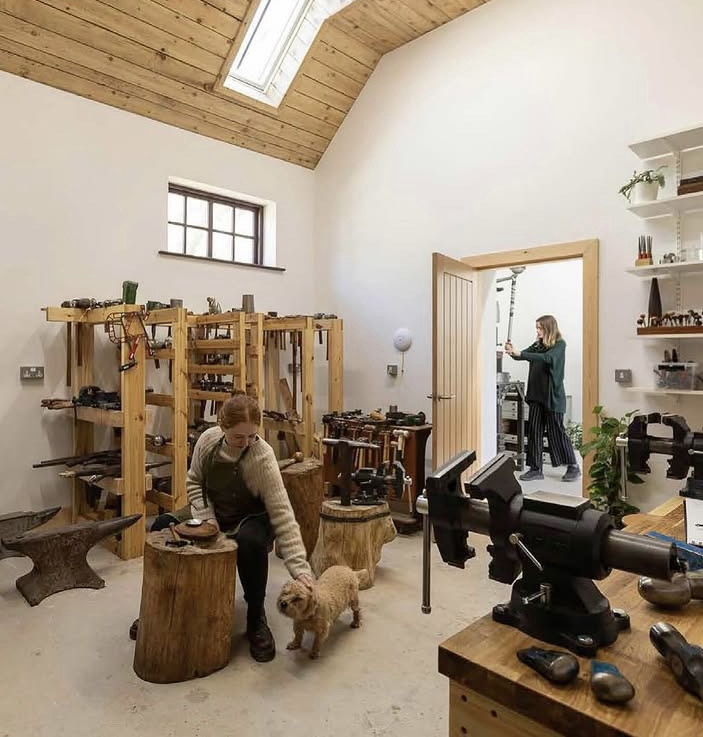
Workshop Space at Hugo Burge Foundation 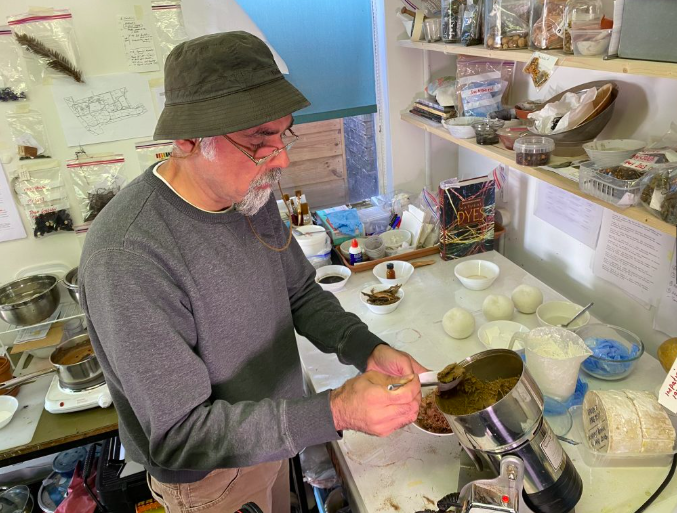
Nabil Ali at the Cambridge Botanic Garden 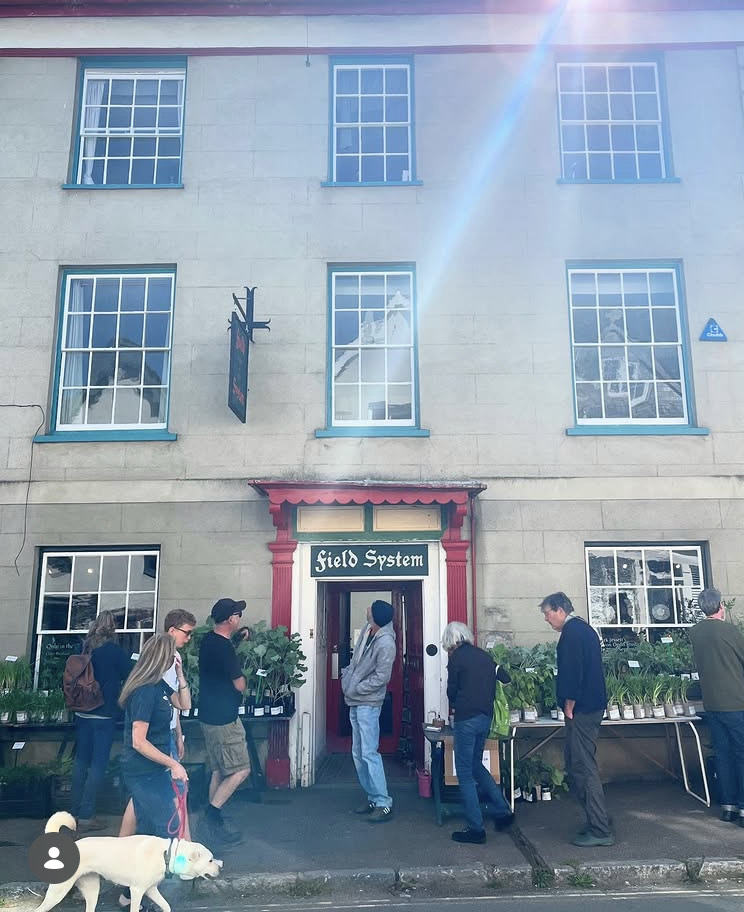
Field System Gallery & Shop 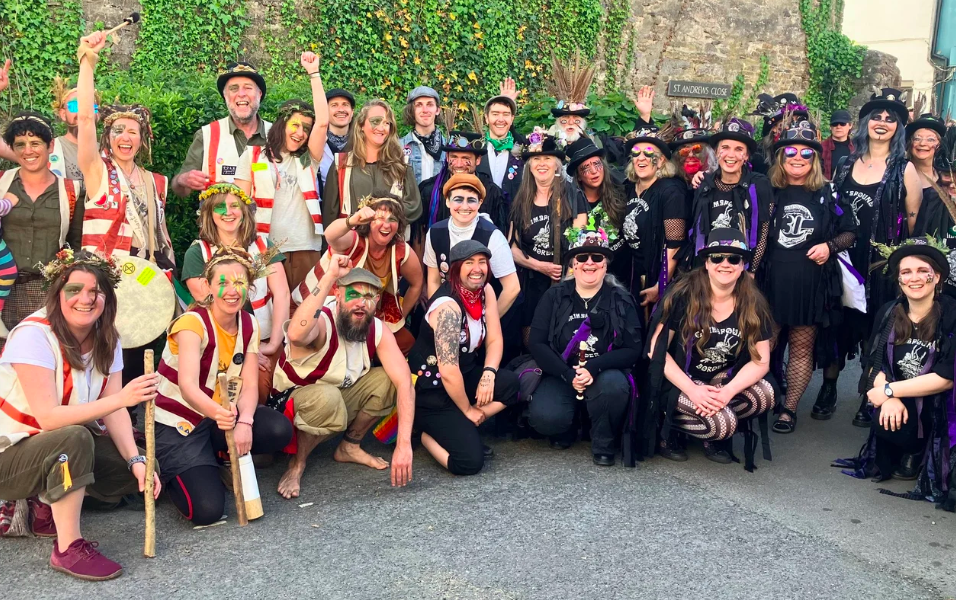
Community Folklore events at Field System 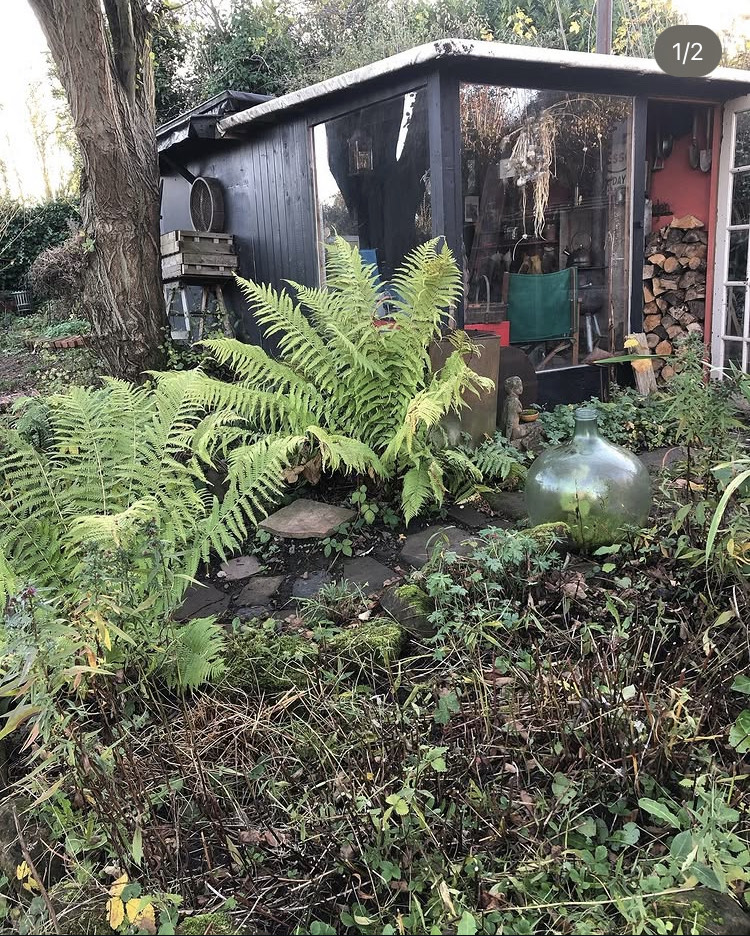
Val Turton’s Allotment Residency space 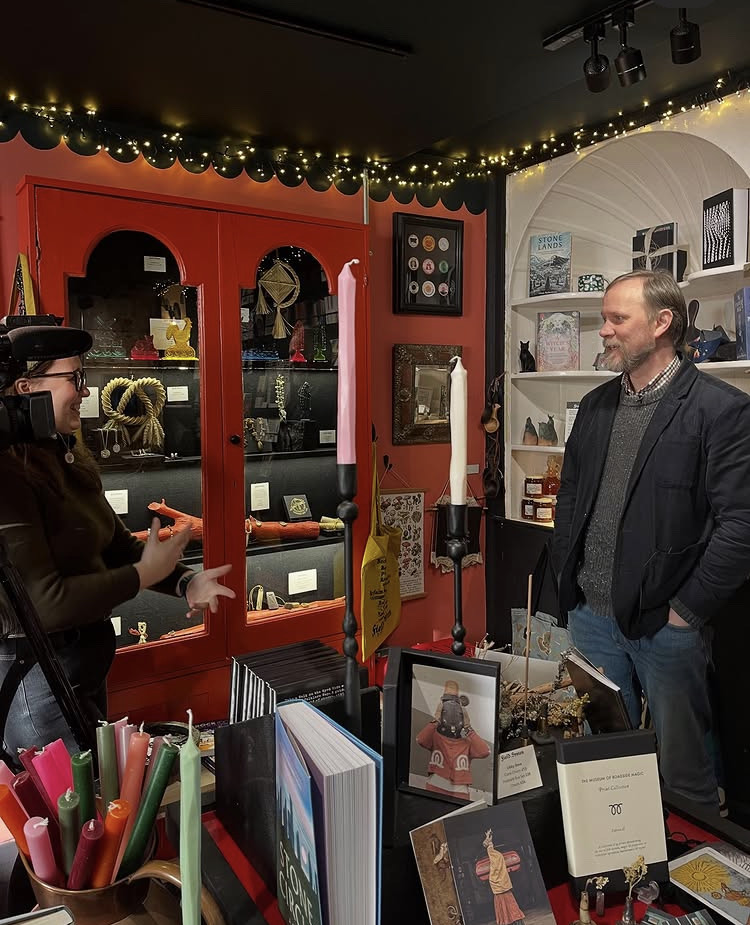
Shop at Field System in Dartmoor 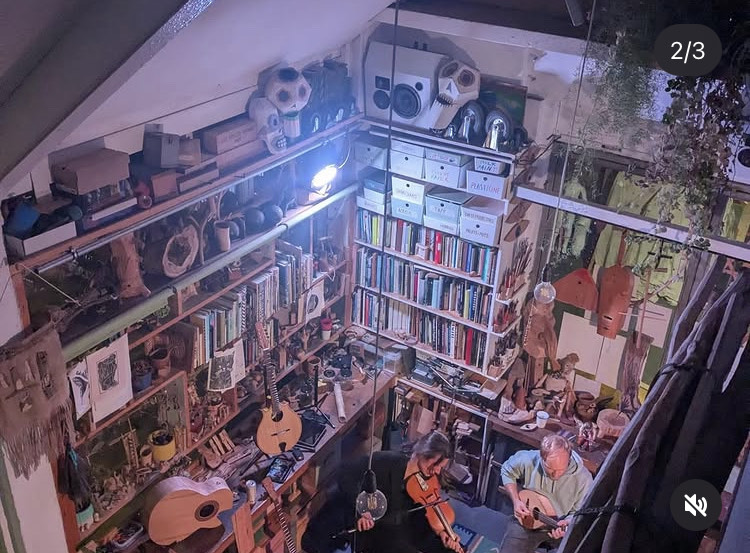
By Our Hands workshop space in Sneinton 
Theraputic Landscapes Conference in Worcester
I also plan to visit the residency spaces of the Hugo Burge Foundation at Marchmont House in the Scottish Borders. I would value the opportunity to investigate their community funding schemes which could benefit future artists residencies for others in the Walled Garden. Finally, I hope to take part in the next Theraputic Landscapes Conference: Ritual, Folklore & Wellbeing at University of Worcester. Having valued the participation in working groups formed at the previous TL event in ’24, I would like the opportunity to present a paper around my research at the Walled Garden for the next event in June ‘26.
3. Current Practice
I am a printmaker working with relief techniques on both paper and ceramics, drawing on motifs rooted in mythology, folklore, and esoteric histories. Recent bodies of work reference archetypal figures such as the wodewose and the green man, as well as medieval mystics and inhabitants of imagined woodland spaces. I am interested in the dialogue between landscape, memory, and symbolic narrative, often informed by vernacular flora, fauna, and rural iconography.
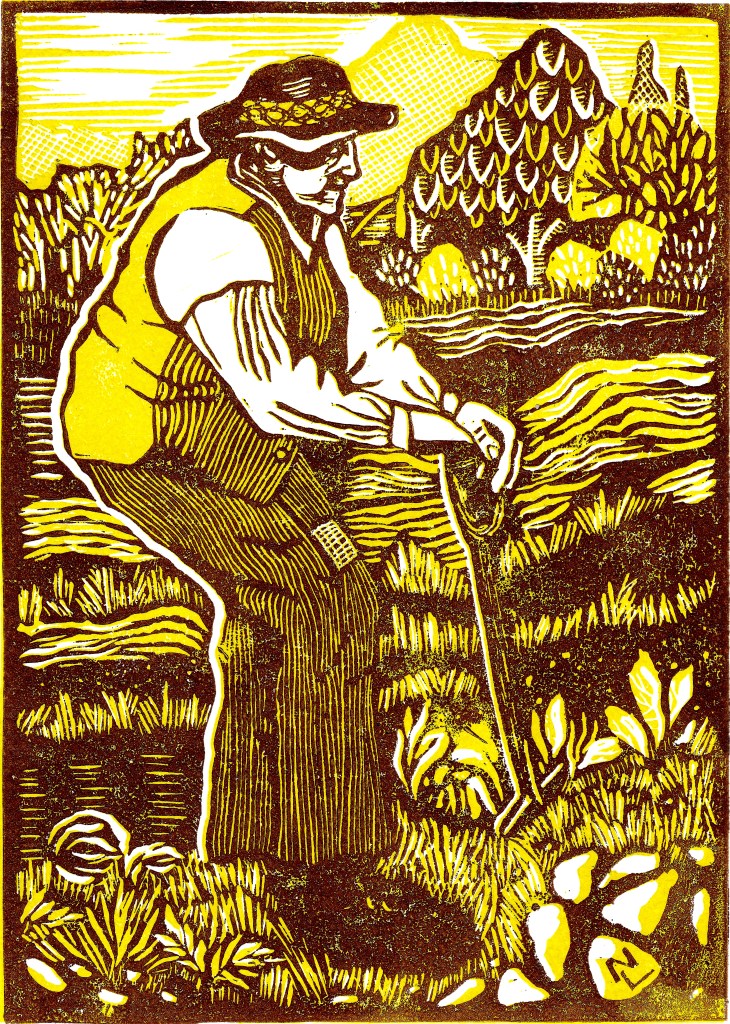
The Gardener, Linocut, 2024 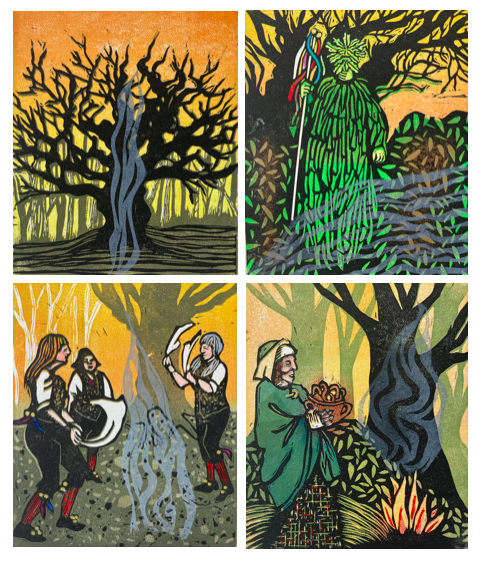
The Green Man and the Major Oak series, Limited Edition Linocuts. 2024 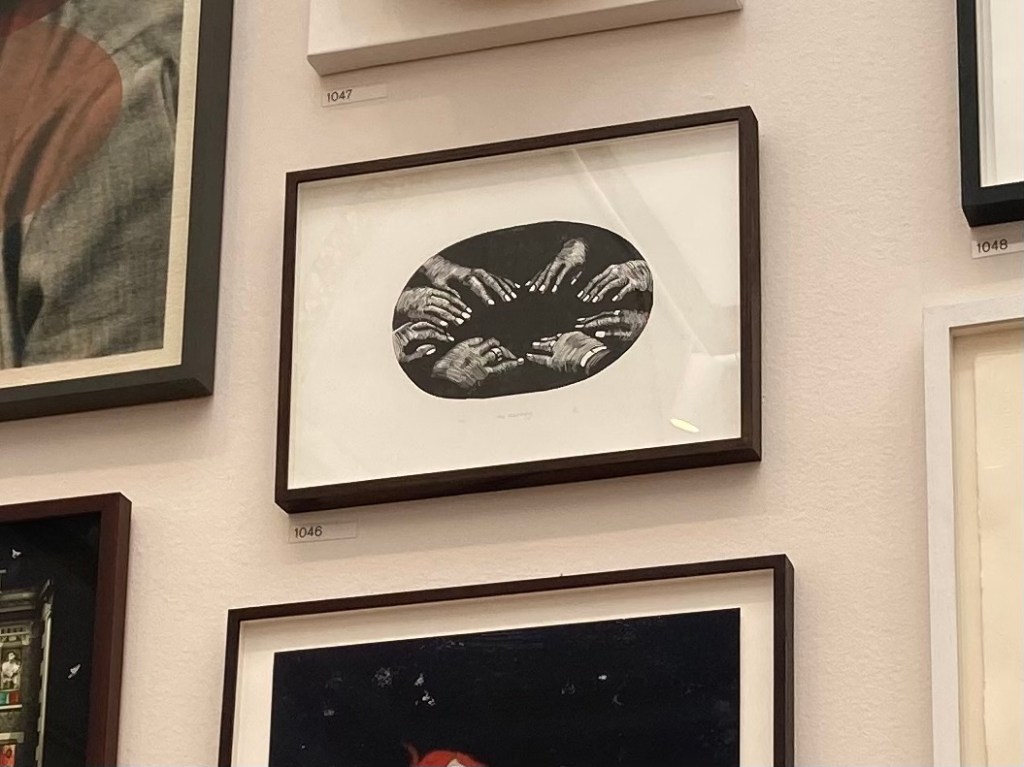
The Meeting, Linocut edition selected for Royal Academy Summer Show, 2023 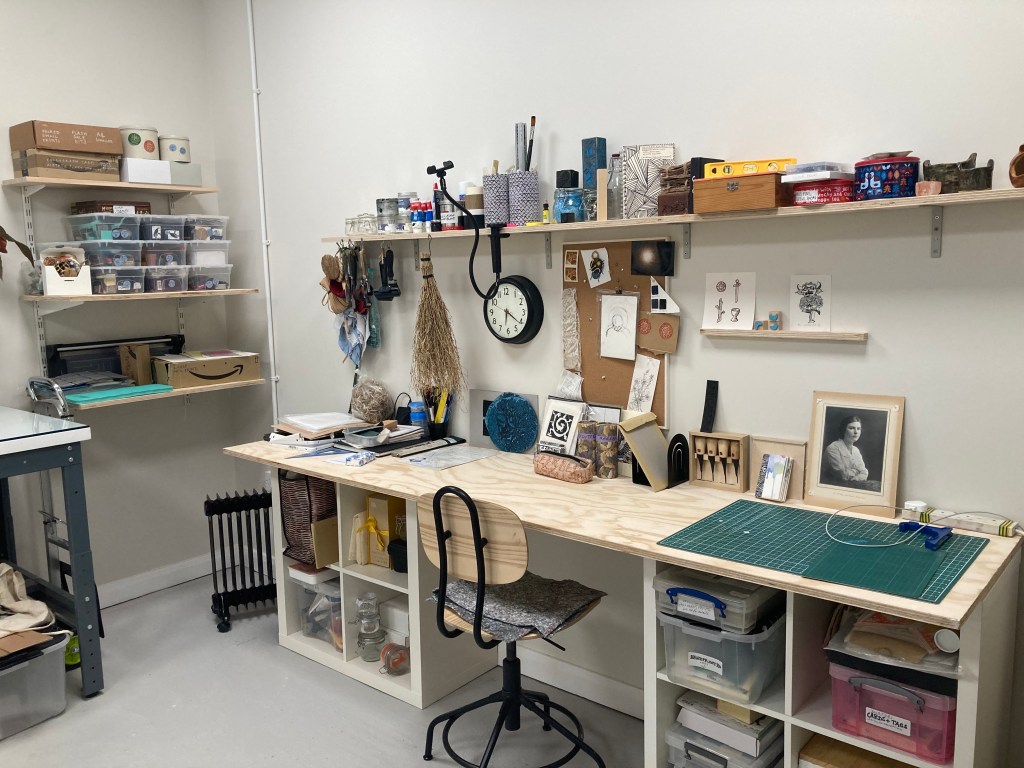
My Current Studio Set up in Sherwood, Nottingham 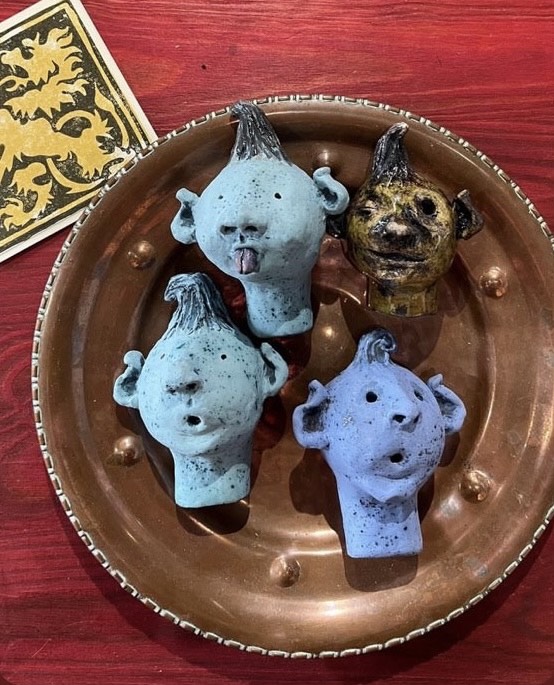
Dartmoor Pixie Whistles, commissioned for Field System Shop, 2024 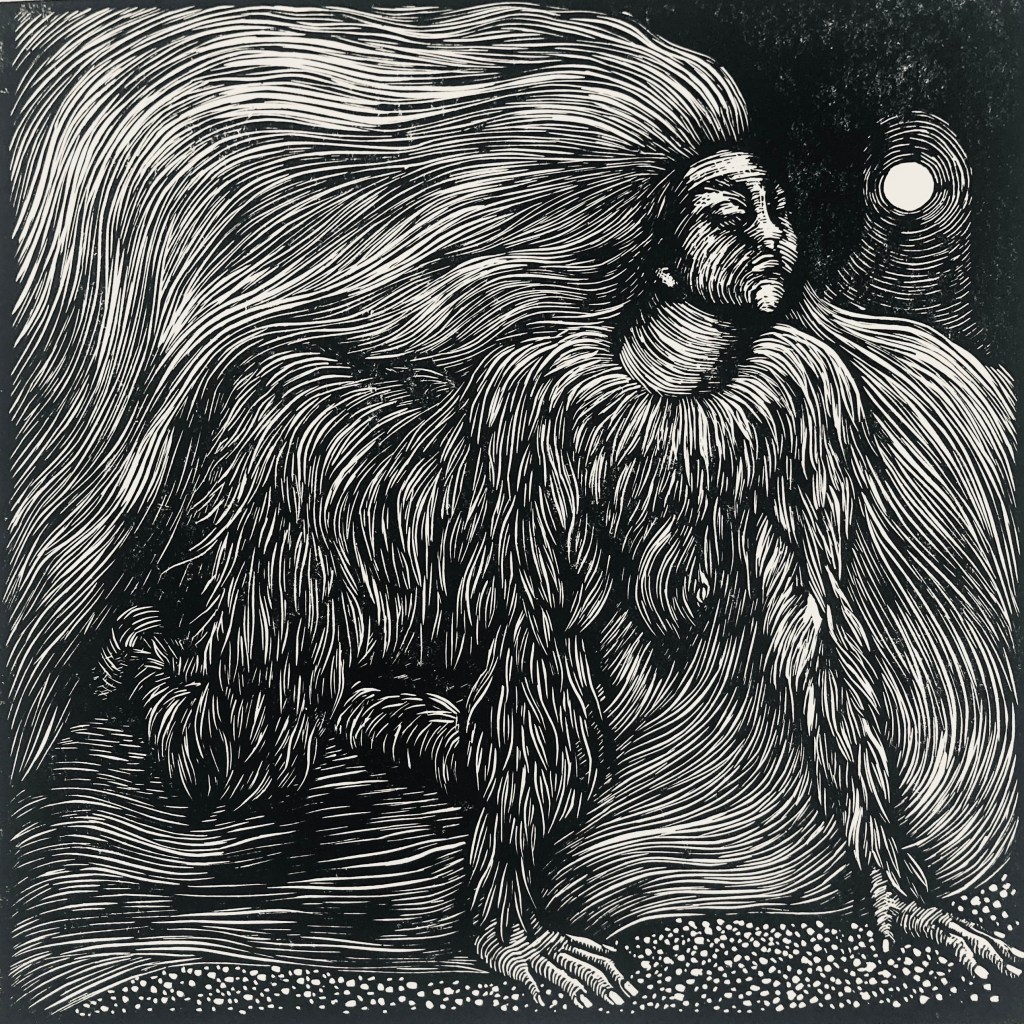
Hairy Mary, Linocut Edition exhibited at The Woolwich Print Fair and Harley Gallery Open. 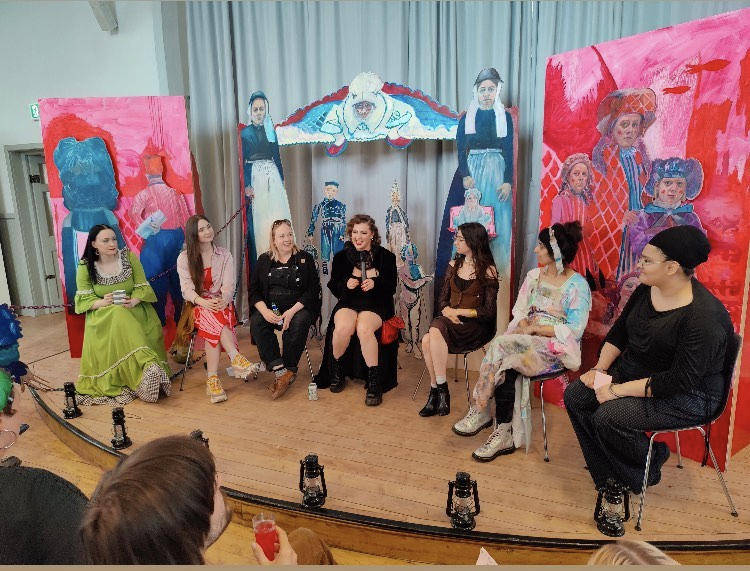
Artist Talk, Boundless, Ilkon. 2024 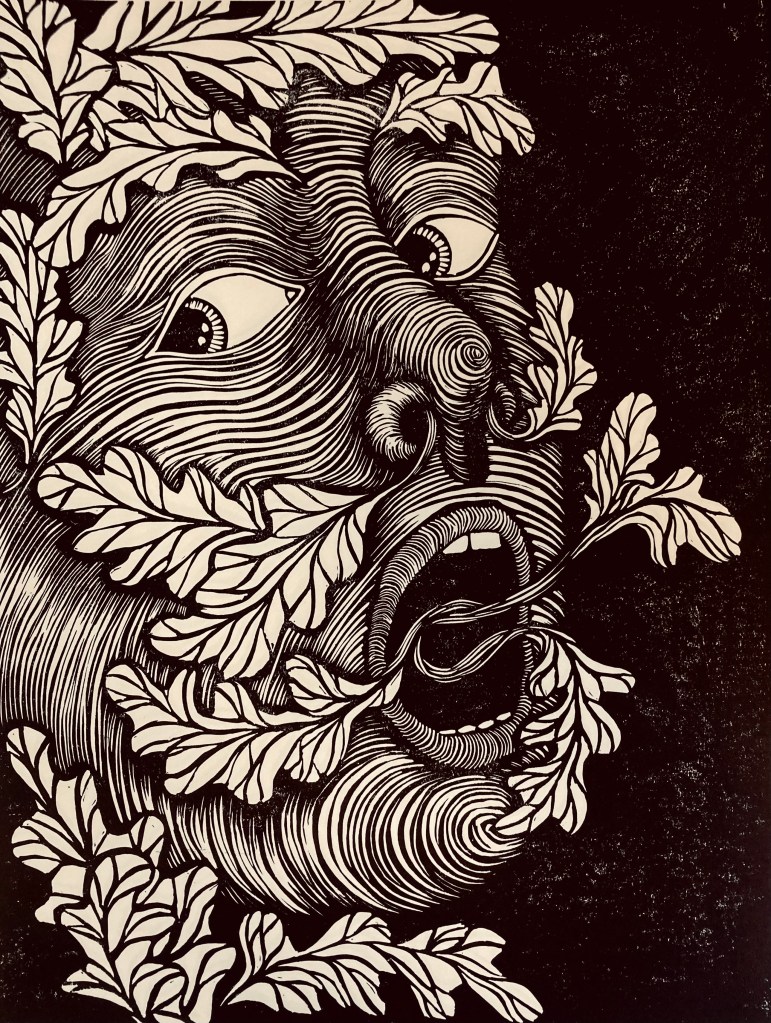
Metamorphosis, Linocut. 2025 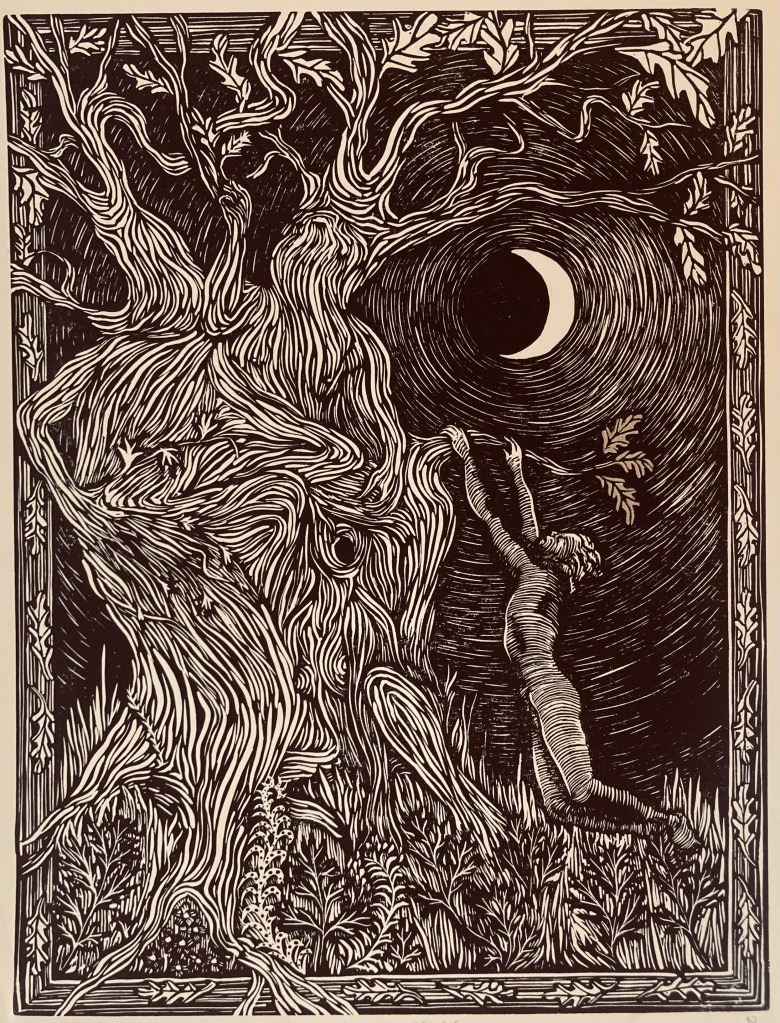
Rex Nemorensis, Linocut. Edition commissioned by Nottingham Castle for FOREST, 2025 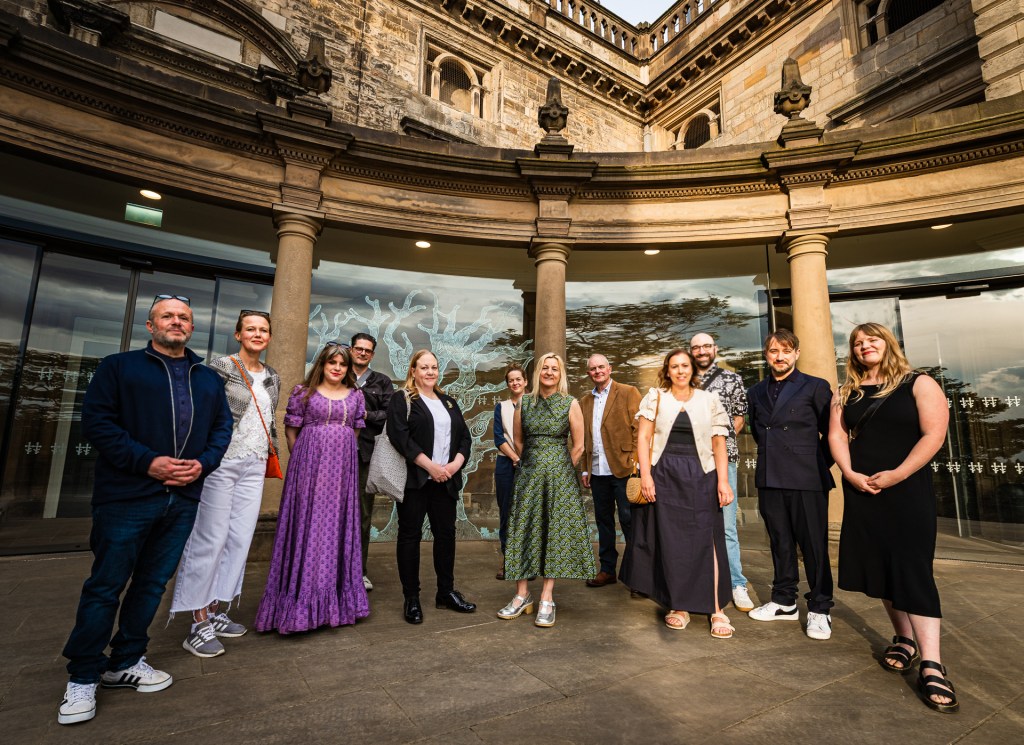
with other commissioned artists for FOREST at Nottingham Castle, 2025 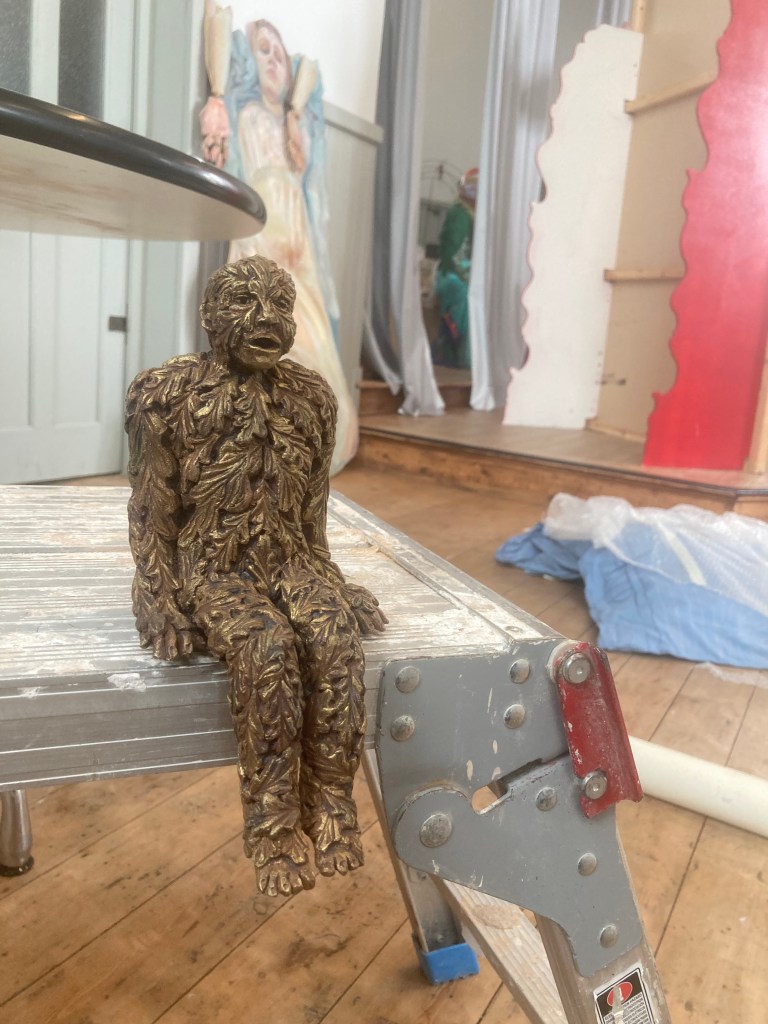
Installing Green Man sculpture in Boundless, curated by Ruby Waage Townsend at ILKON, 2024
My work spans linocut, intaglio, screenprint, and monoprint processes. I am a member of Leicester Print Workshop and an associate of Two Queens Studios and have a small studio in Sherwood. I have exhibited widely, including at the Royal Academy Summer Exhibition and was recently commissioned to produce a limited-edition linocut for the FOREST exhibition at Nottingham Castle Museum & Art Gallery.
More information here
4. Selected curatorial projects
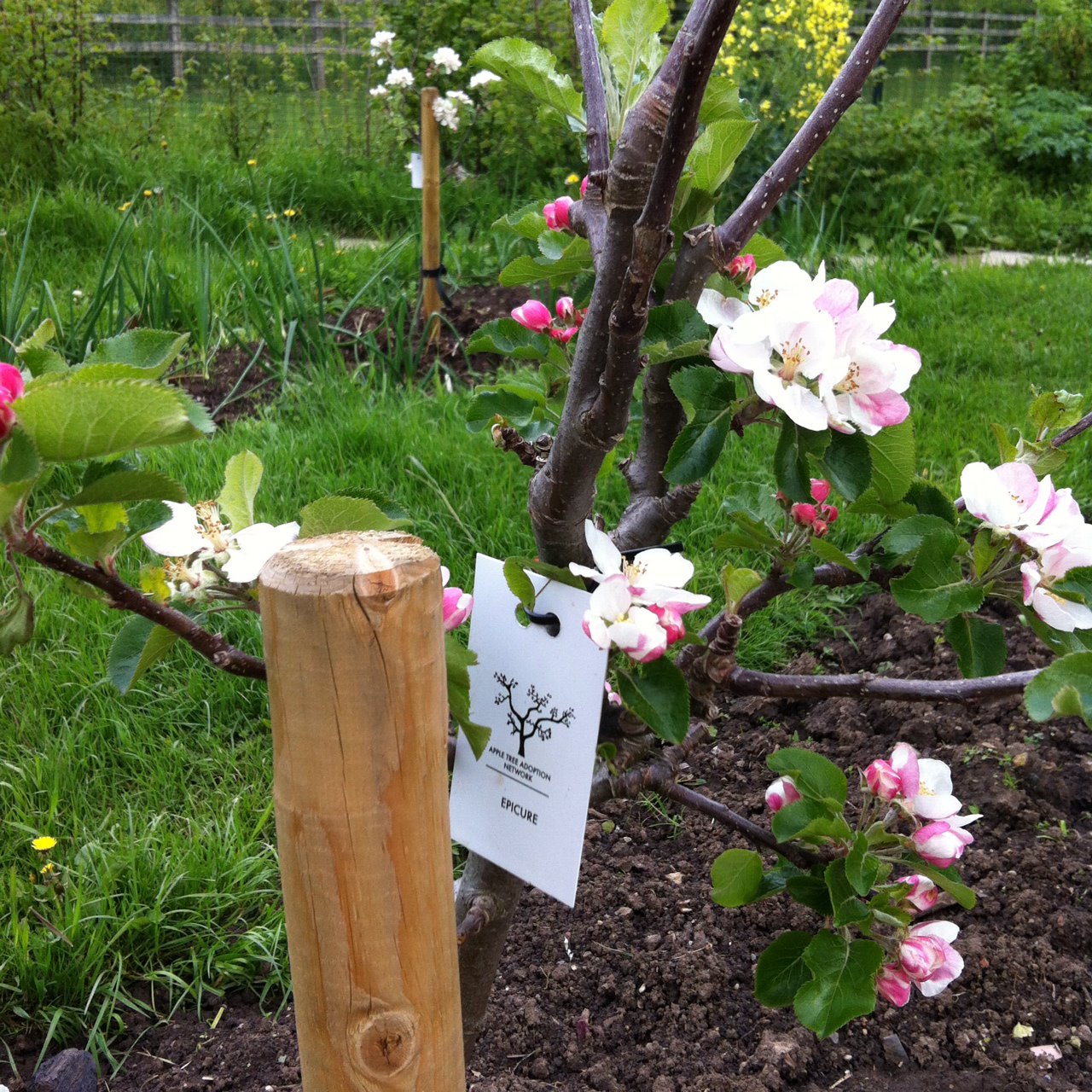
Orchard. Commissioned project with Neville Gabie in Sneinton Market. Working for Nottingham City Council and Contemporary Art Society. 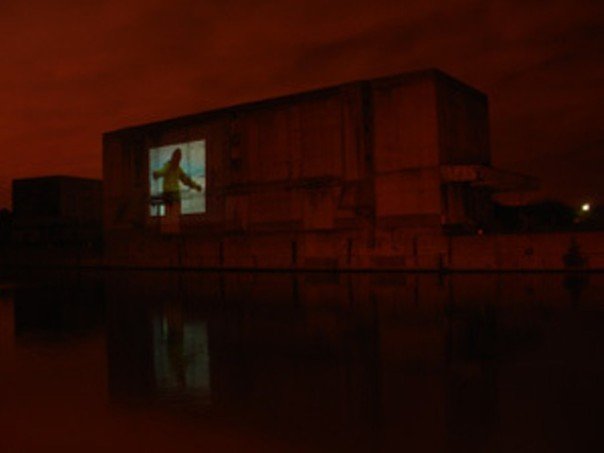
Birgir. Commission for Hinterland Projects with Icelandic Choreographer Helena Jonsdottir. Projection over the River Trent, 2007 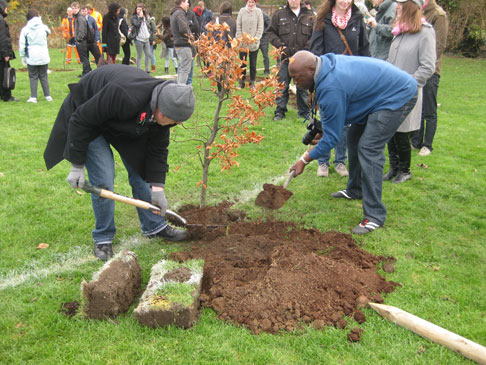
The Clearing. Commission by John Newling For Hinterland Projects 2010 in Beeston. 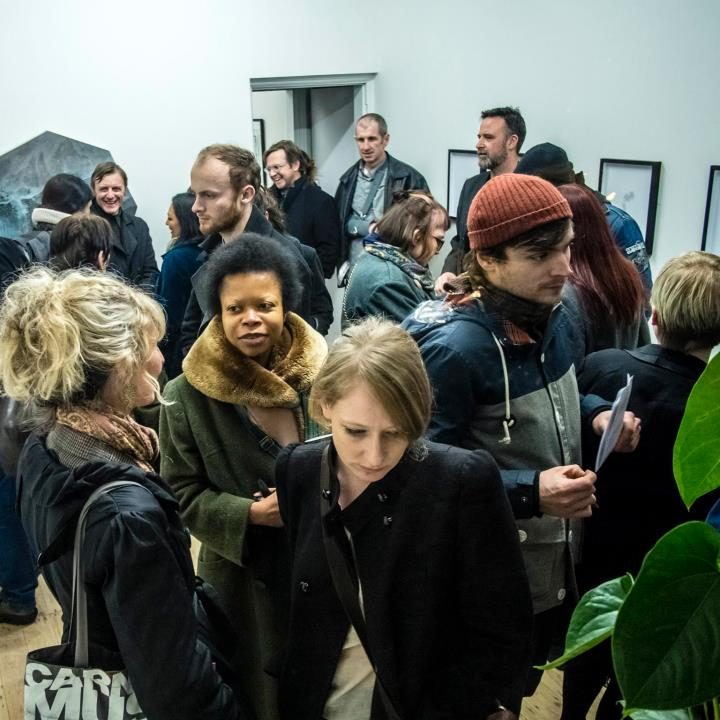
Launch of Syson Gallery. Working with artists between 2013 – 2018 to present commissioned projects, exhibitions and presentations at art fairs. 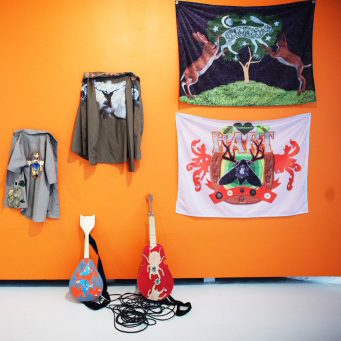
Extreme Crafts: Commission by Juneau Projects at CAC Vilnius, Lithuania, 2007 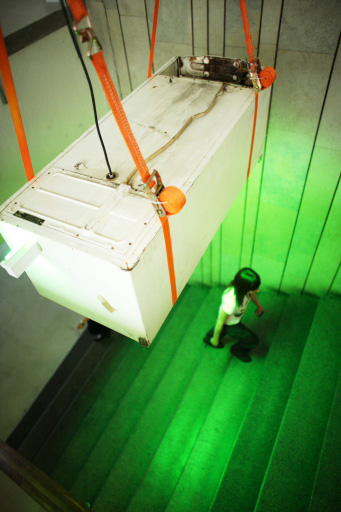
Installation shot of Extreme Crafts, CAC Vilnius, 2007 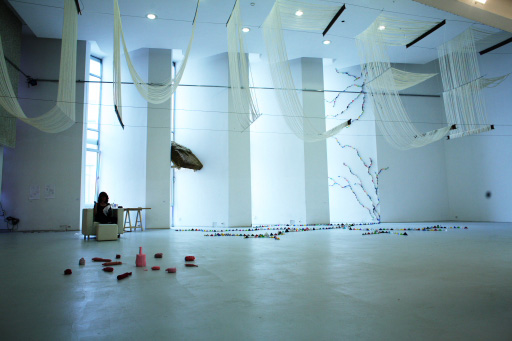
Installation shot of Extreme Crafts, CAC Vilnius, 2007 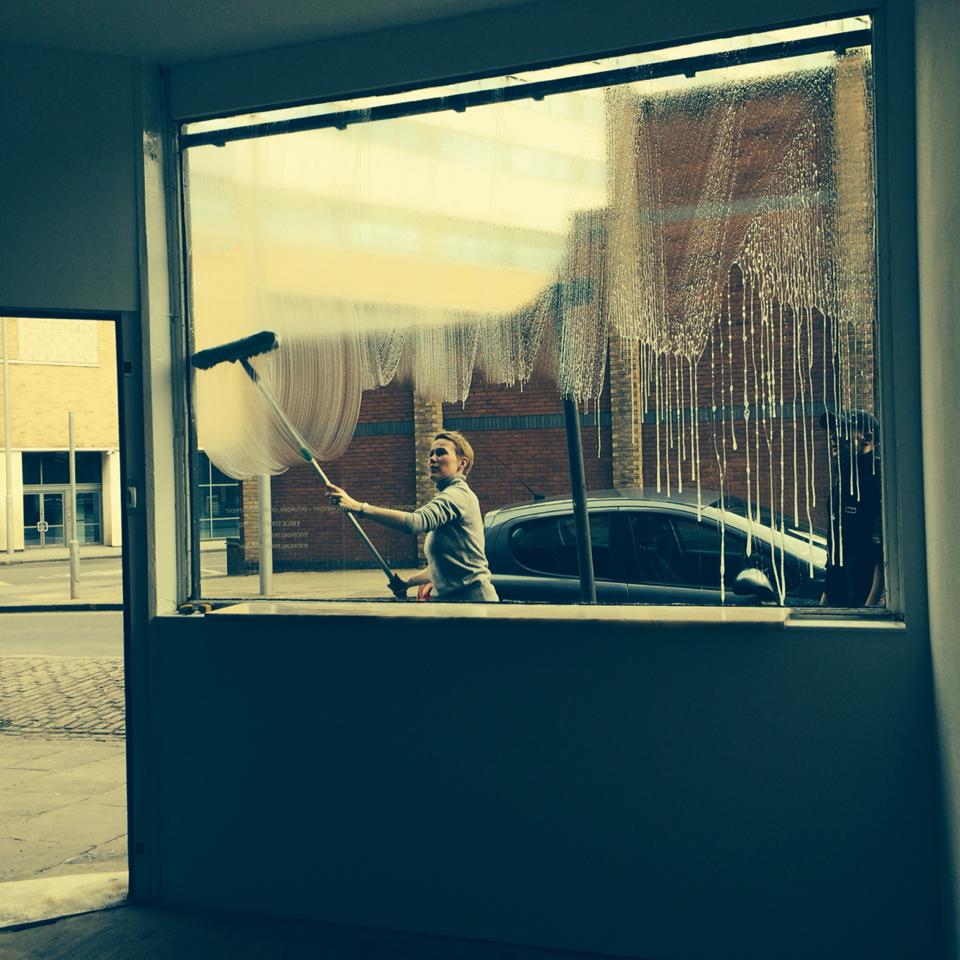
Window Painting. Commission with Yelena Popova for the Spare Room Residency at Syson Gallery, 2014. 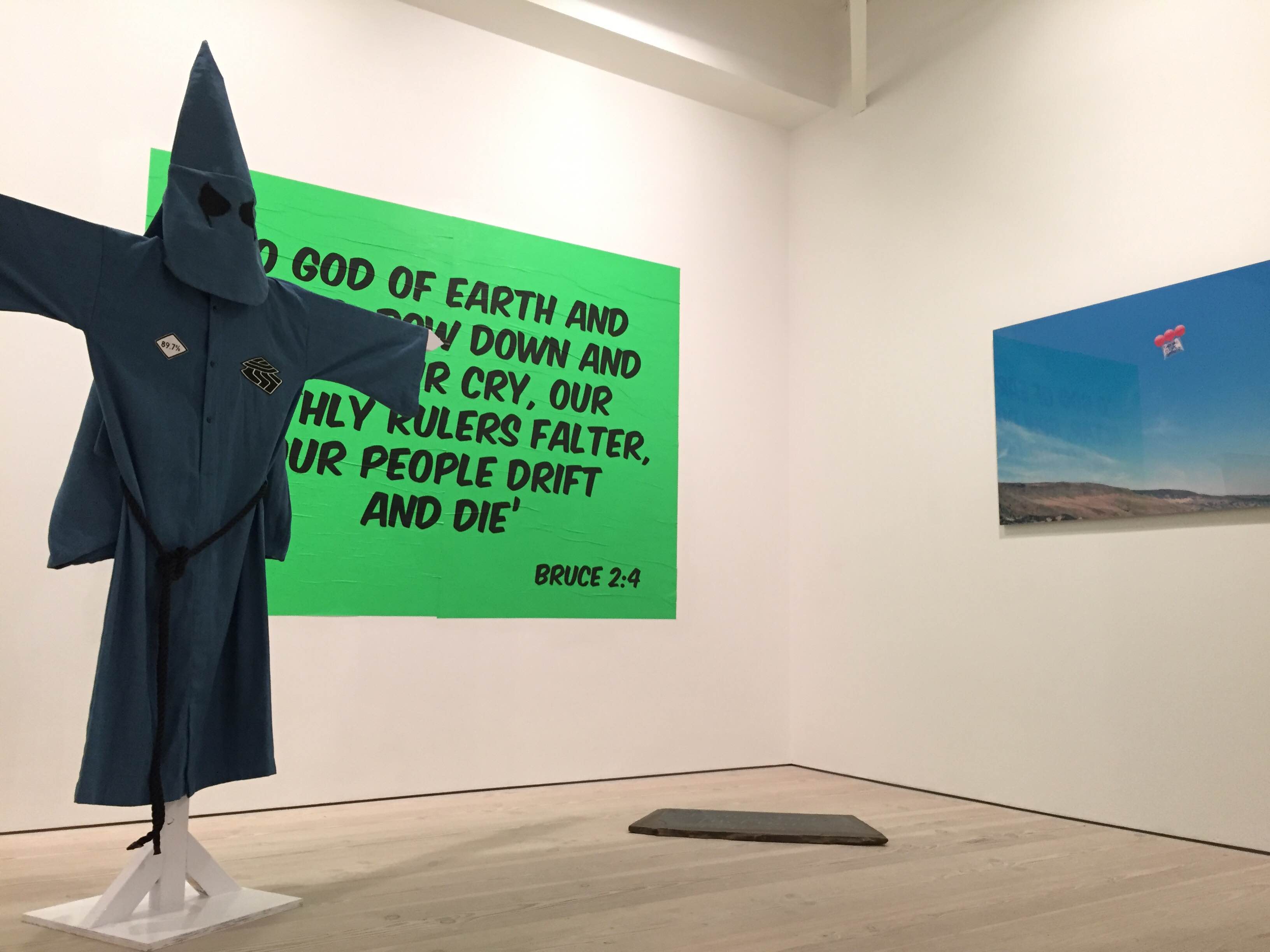
Revelations. Presentation at START Art Fair, Saachi Gallery with S Mark Gubb, 2017 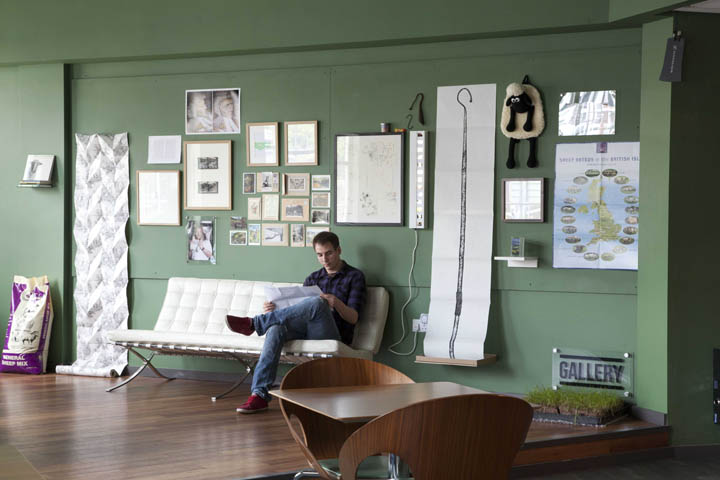
Sheep Sketchbook. Installation by Georgina Barney at Confetti, Nottingham, 2014 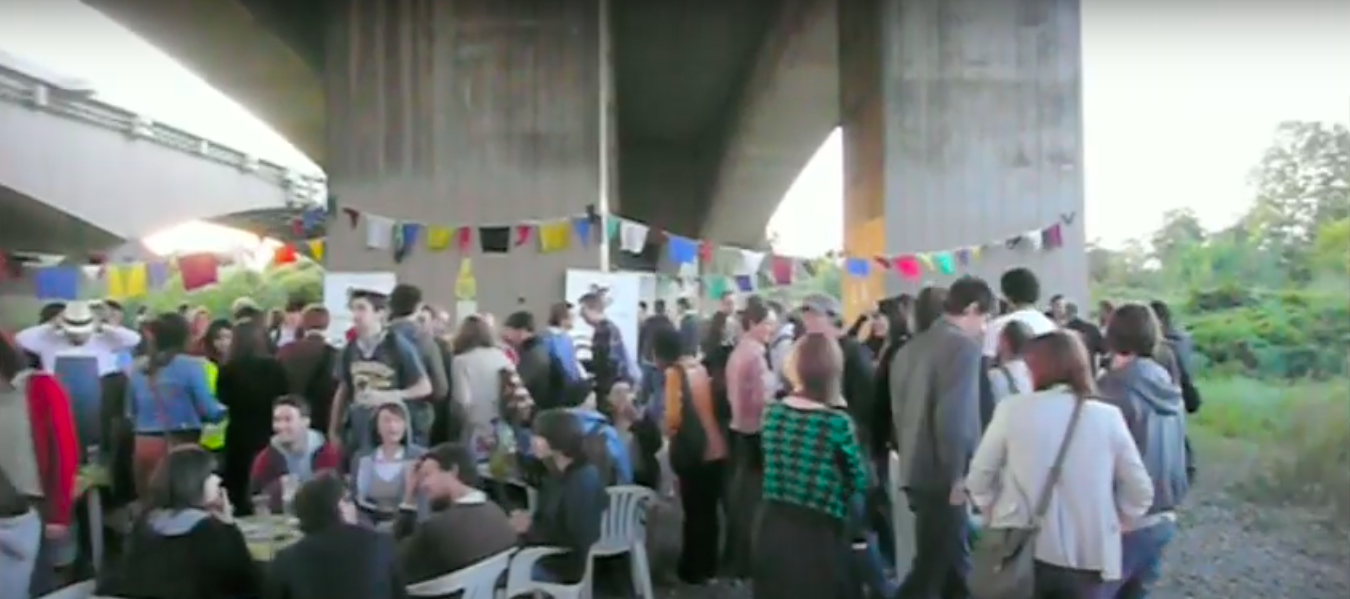
Cycle Powered Cinema with film programme curated by Annexinema for Hinterland Projects, 2010. (Underneath Clifton Bridge) 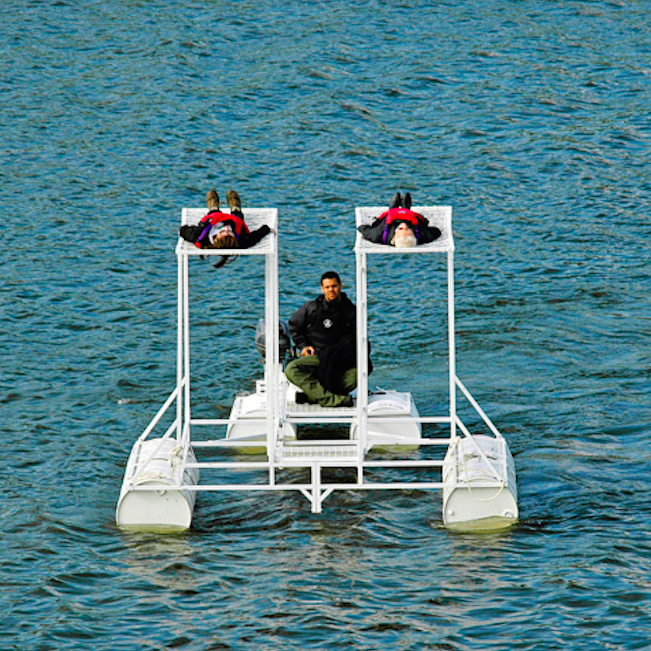
The Styx. Commission for Hinterland Projects with Rob Sweere in collaboration with The National Watersports Centre, Holme Pierpont. 2009
In addition to my studio practice, I have contributed significantly to the field as a curator, having delivered several public art commissions, founded an independent gallery, and organised a number of festivals and exhibitions. I have a BA in Printmaking from Norwich School of Art and an MA in Curating Contemporary Art from the Royal College of Art. My work bridges a curatorial, site-responsive and personal artistic praxis rooted in ecology, materiality, and folklore. Over the past two decades, I’ve led major site-specific and artist-led public art projects including Hinterland (in and around the River Trent), Sideshow (British Art Show 6 fringe), and Orchard in Sneinton Market for the Contemporary Art Society.
More information here
Further Reading
Current/Future Reading List to inform research:
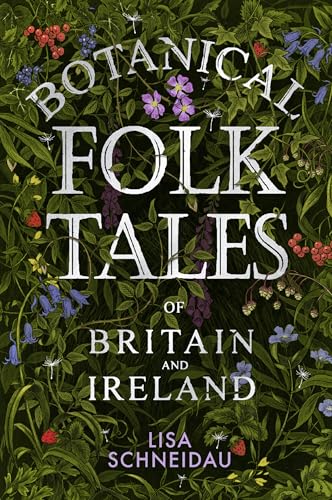
- Botanical Folk Tales of Britain & Ireland – Lisa Schneidau
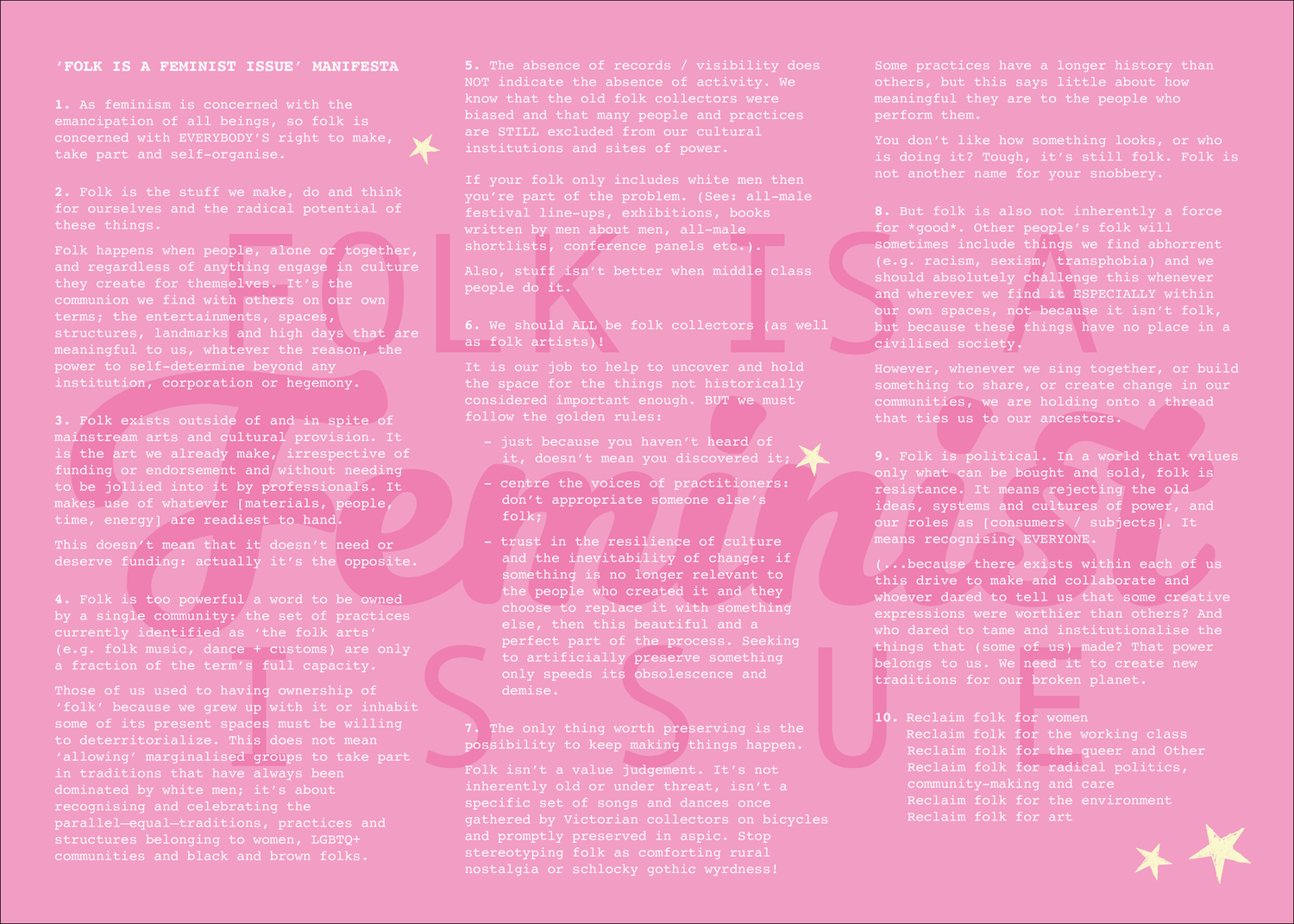
- Folk is a Feminist Issue/ Folk Manifesto – Lucy J Wright
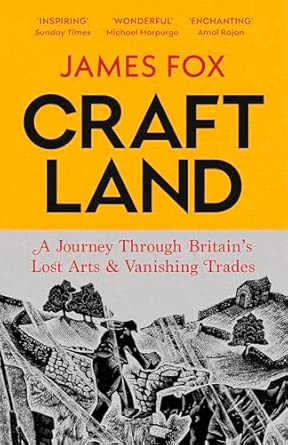
- Craft Land: A Journey through Britain’s Lost Arts and Vanishing Trades – James Fox
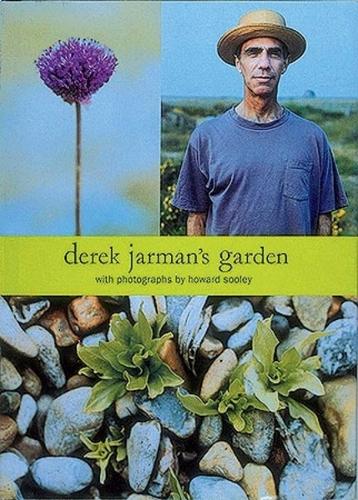
- Derek Jarman’s Garden with photographs by Howard Sooley
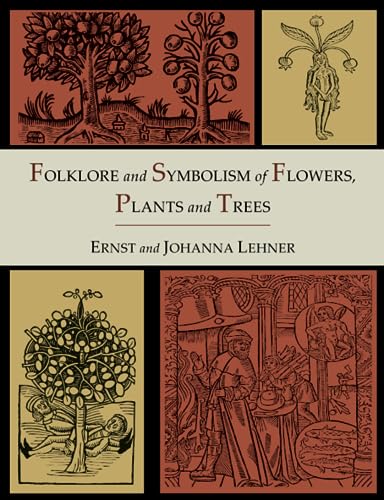
- Folklore and Symbolism of Flowers Plants and Trees – Ernst and Johanna Lehner
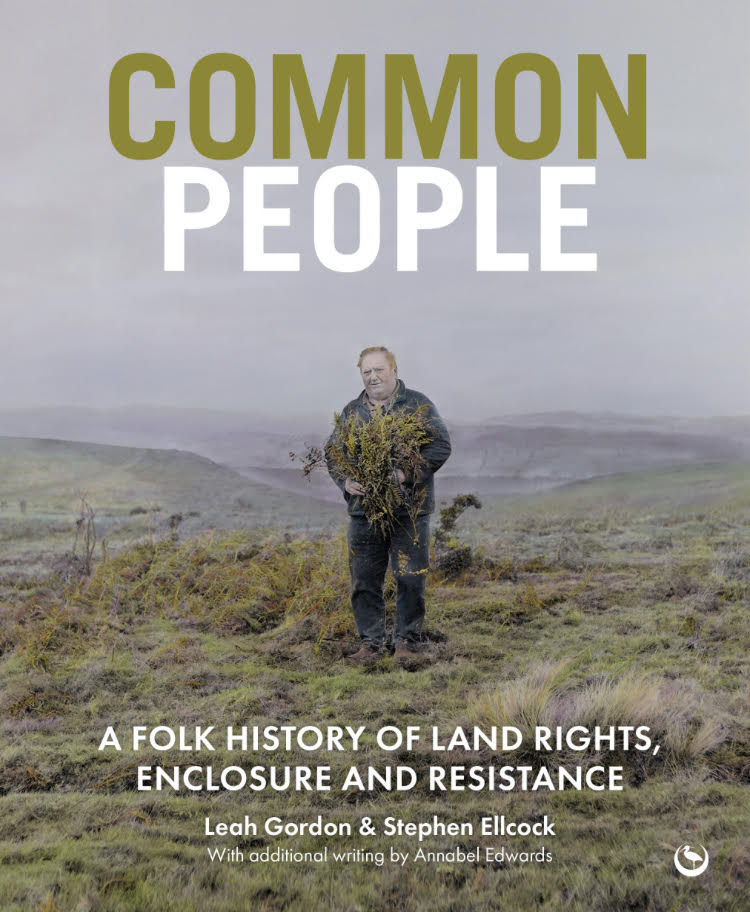
- Common People: Folk History of Land Rights, Enclosure and Resistance – Leah Gordon and Stephen Ellcock
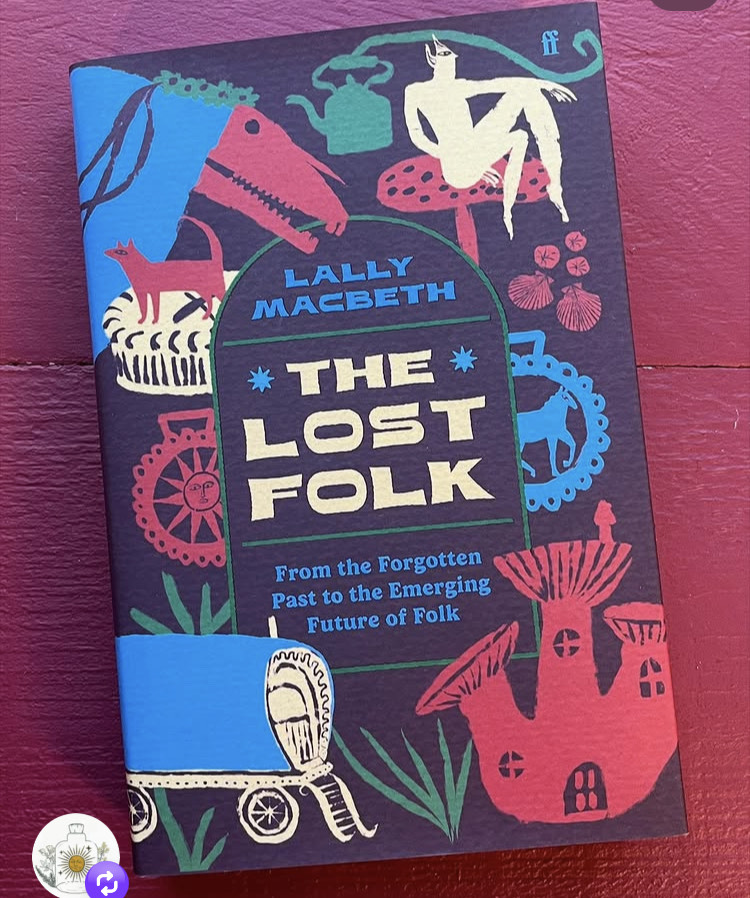
- The Lost Folk: From the Forgotten Past to the Emerging Future of Folk – Lally MacBeth
- Clay: A Human History – Jennifer Lucy Allen
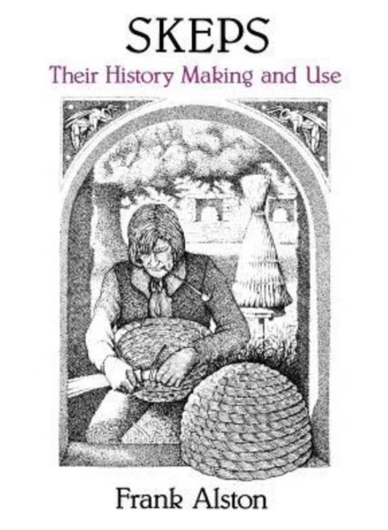
- Skeps: Their History, Making and Use – Frank Alston
 Jennie Syson